
Effekter av kostinterventioner på depressionssymtom
Sammanställning av systematiska översikter från SBU:s upplysningstjänst
Fråga
Vilka systematiska översikter finns om effekter av kostinterventioner, i form av helhetsbaserade kostupplägg eller kosttillskott, på depressionssymtom?
Frågeställare: Dietist, Region Jönköping
Sammanfattning
Kunskapsläget
- Vi har identifierat nio systematiska översikter som vi bedömer är tillräckligt välgjorda för att vi ska presentera resultaten.
- Översikterna fokuserar på helhetsbaserade kostupplägg i form av medelhavsdiet (2 översikter) samt kosttillskott i form av omega-3-fettsyror (2 översikter), pro- och prebiotika (3 översikter) och D-vitamin (2 översikter).
- Resultaten ger ingen tydlig bild och varierar mellan de undersökta interventionerna och översikterna. För D-vitamin, omega-3-fettsyror och probiotika pekar resultaten i de inkluderade översikterna sammantaget mot att kostinterventionerna kan minska depressionssymtom. För prebiotika är resultaten osäkra, och för medelhavsdiet finns inget stöd för någon tydlig effekt. Resultaten bör dock tolkas med försiktighet. Där tillförlitligheten har bedömts är den ofta låg eller mycket låg. Det innebär att det inte går att dra några säkra slutsatser om interventionernas effekter.
- Översiktsförfattarna beskriver återkommande metodologiska utmaningar och begränsningar i underlaget. För flera av interventionerna bygger resultaten på ett litet antal studier med få deltagare. Studierna skiljer sig också åt på flera sätt, till exempel avseende dosering, behandlingstid, deltagarnas utgångsvärden och uppföljningstid.
Vad betyder det här?
Underlaget skiljer sig åt mellan studierna och har flera metodologiska begränsningar. Därför är det svårt att dra generella slutsatser om effekterna. I de översikter där resultatens tillförlighet har bedömts har den ofta varit låg eller mycket låg. Det innebär att vi inte säkert vet om insatserna har effekt eller hur stora effekterna är. Nya studier kan därför komma att förändra slutsatserna.
SBU:s kommentarer
- Flera av de inkluderade översikterna har inte tagit hänsyn till studiedeltagarnas näringsstatus vid studiestart (det vill säga om de hade brist på de ämnen som interventionen avsåg). De har inte heller alltid beaktat om deltagarna samtidigt fick annan behandling för depression. Det innebär att analyserna kan omfatta personer med olika utgångslägen, vilket gör det svårare att tolka interventionernas effekter.
- Samtliga inkluderade systematiska översikter har undersökt kostinterventioner i studier med experimentell design. Den typen av studiedesign ger bättre förutsättningar att dra slutsatser om effekter än observationsstudier. Resultaten kan ändå påverkas av flera faktorer, till exempel interventionens innehåll och längd, deltagarnas kostvanor och näringsstatus vid studiestart samt om interventionen kombineras med andra behandlingar eller livsstilsförändringar. Resultaten behöver därför tolkas utifrån studiernas sammanhang och deltagarnas förutsättningar.
- Det finns även systematiska översikter som bygger på observationsstudier, till exempel kohortstudier baserade på registerdata. Dessa studier kan ge viktig kunskap om samband mellan kost och hälsa och omfattar ofta många deltagare samt långa uppföljningstider. Däremot är det svårare att avgöra om de samband som observeras faktiskt beror på kosten eller på andra faktorer. I den här rapporten har vi därför endast inkluderat översikter som bygger på primärstudier med experimentell studiedesign.
Bakgrund
Depression är en psykisk sjukdom som bland annat kännetecknas av nedstämdhet, trötthet och orkeslöshet. Sjukdomen är vanlig och orsakerna till att man insjuknar kan beskrivas som ett samspel mellan yttre faktorer och individuell sårbarhet. Depression delas vanligen in i lindrig, medelsvår och svår depression. Behandling kan bestå av läkemedel, olika typer av psykoterapi eller en kombination av båda. Vid lindrig depression kan råd och stöd för goda levnadsvanor vara ett första steg i behandlingen. Det kan till exempel handla om regelbundna, varierade och hälsosamma matvanor [1].
Frågeställning
Upplysningstjänsten har tillsammans med frågeställaren formulerat frågan enligt följande PICOS1:
- Population: Vuxna med diagnostiserad depression
- Intervention: Kostinterventioner, både helhetsbaserade kostupplägg och kosttillskott
- Control: Ingen eller annan intervention, placebo, väntelista eller sedvanlig behandling
- Outcome: Förändring i depressionssymtom
- Study design: Systematiska översikter helt eller delvis baserade på primärstudier med experimentell studiedesign
Vi inkluderar systematiska översikter publicerade i vetenskapliga tidskrifter samt systematiska översikter från myndigheter och HTA-organisationer, som har publicerats på engelska eller ett av de skandinaviska språken.
1. PICOS är en förkortning för patient/population/problem, intervention (insats, behandling)/, comparison/control (jämförelseintervention (insats, behandling)), outcome (utfallsmått) och study design (studiedesign).
Resultat
Vi har inkluderat nio systematiska översikter med måttlig risk för bias [2-10]. Det innebär att vi anser att de är tillräckligt välgjorda för att presentera resultaten. Översikterna har delats in i två kategorier: helhetsbaserade kostupplägg och kosttillskott. Kosttillskotten omfattar fleromättade fettsyror, pro- och prebiotika samt vitaminer och mineraler. De flesta översikterna handlar om kosttillskott.
Inom flera kategorier bygger översikterna till stor del på samma primärstudier och kommer fram till liknande resultat. I dessa fall har vi valt ut vilka översikter som redovisas utifrån en samlad bedömning av deras relevans och kvalitet. Resultaten har inte analyserats utifrån svenska förhållanden. Vi identifierade även 33 översikter som är relevanta för frågan men som bedömdes ha hög risk för bias [11-43]. Hög risk för bias innebär en betydande risk för att resultaten är missvisande. Därför presenterar vi inga resultat eller slutsatser från dessa översikter. Dessa översikter omfattar, utöver helhetsbaserade kostupplägg och kosttillskott, även specifika födoämnen som saffran och gurkmeja [21] [28], grupper av födoämnen som inte har bedömts passa in i övriga kategorier, till exempel neutraceticals och polyfenoler [20] [27], samt i ett fall en översikt som inkluderar flera olika kategorier [19].
Sökning och urval av studier, samt bedömning av risk för bias beskrivs i metodavsnittet.
Helhetsbaserade kostupplägg
Inom kategorin helhetsbaserade kostupplägg inkluderade vi två systematiska översikter (från år 2025) som undersökte effekter på depressionssymtom. Båda översikterna hade en bred ansats vad gäller kostinterventioner. För personer med depression baserades resultaten dock främst på studier av medelhavsdiet. Medelhavsdiet kännetecknas av högt intag av olivolja, grönsaker, baljväxter, fisk och fullkornsprodukter samt ett lågt intag av rött kött.
Överlappet av primärstudier mellan översikterna var stort och resultaten samstämmiga. Därför redovisar vi endast resultaten från Tavakoly och medförfattare [10]. Abukmail och medförfattare inkluderade en bredare population med en större variation av kostinterventioner. Översikten var därför mindre direkt jämförbar med populationen som studeras i den här rapporten, det vill säga personer med kliniskt diagnostiserad depression [2]. I översikten ingick både personer med enbart depression och personer som hade depression i kombination med ökad kardiometabol risk. För den senare populationen studerades även andra typer av kostupplägg än medelhavsdiet.
I den systematiska översikten av Tavakoly och medförfattare undersöktes effekten av medelhavsdiet på depressionssymtom [10]. Översikten inkluderade fem randomiserade kontrollerade studier (RCT-studier) med totalt 952 deltagare. Deltagarna hade depression av varierande svårighetsgrad. Populationen omfattade både kliniskt diagnostiserad depression och personer med förhöjda depressionssymtom (Tabell 1).
Interventionerna bestod främst av rådgivning och regelbundna kontakter med dietist för att hjälpa deltagarna att följa en medelhavsdiet. Stödet omfattade både generell information om kost och individanpassade råd. Ofta fick deltagarna även stödmaterial, till exempel recept, måltidsplaner och inköpslistor. I vissa studier ingick även insatser för att underlätta förändrade kostvanor, såsom målsättning, självmonitorering och motiverande samtal. I flera studier fick deltagarna dessutom tillgång till livsmedel eller ingredienser som ingår i medelhavsdieten. Interventionernas längd varierade från tre veckor till två år. Det innebar skillnader både i uppföljningstid och hur ofta deltagarna hade kontakt med dietist eller annan vårdpersonal.
Kontrollgrupperna fick inga instruktioner om att förändra sina kostvanor eller att följa en medelhavsdiet. I två studier fick kontrollgruppen regelbundna samtal utan innehåll om kost (aktiv kontroll). I de övriga tre studierna fortsatte kontrollgruppen sina vanliga kostvanor utan samtal eller andra insatser (passiv kontroll). Eftersom kontrollgrupperna skilde sig åt analyserade översiktsförfattarna primärstudierna utifrån typ av kontrollgrupp. Deltagarnas följsamhet till medelhavsdieten bedömdes med hjälp av självskattningsformulär. Som förväntat var följsamheten högre i interventionsgrupperna än i kontrollgrupperna.
Enligt översiktsförfattarna hade medelhavsdiet ingen statistiskt signifikant effekt på depressionssymtom jämfört med vare sig aktiva eller passiva kontrollgrupper. Detta gällde både på kort, medellång och lång sikt. Författarna bedömde att resultatens tillförlitlighet var låg. Skälen var att underlaget omfattade få studier, att studierna var heterogena och att de inkluderade primärstudierna hade hög risk för bias.
| RCT= randomized controlled study; UK = United Kingdom; SMD = standardized mean difference; CI = confidence interval | ||
| Included studies | Population, Intervention, Control | Outcome and Results |
|---|---|---|
| Tavakoly et al, 2025 [10] Effect of Different Dietary Patterns on Patients with Depressive Disorders: A Systematic Review and Meta-Analysis of Randomized Controlled Trials |
||
| Included studies: 5 RCT Setting: Australia: 3 studies Spain: 1 study Four European countries (Germany, Spain, UK, Netherlands): 1 study |
Population: 952 adults with clinically diagnosed depressive disorders or elevated depressive symptoms Intervention: Interventions were broadly defined as dietary patterns delivered as standalone interventions, but all included studies examined the Mediterranean diet. Control: Both active controls such as befriending intervention (2 studies) and passive controls such as habitual diet (2 studies) or placebo (1 study) |
Depressive symptom severity (short term) Compared to active control (2 studies, n=142) Statistically non-significant results SMD: −1.25 (95% CI, −5.11 to 2.61) Compared to passive control (3 studies, n=810) Statistically non-significant results SMD: −0.22 (95% CI, −0.74 to 0.29) Depressive symptom severity (intermediate term) Compared to passive control (2 studies, n=709) Statistically non-significant results SMD: −0.14 (95% CI, −0.98 to 0.70) Depressive symptom severity (long term) Compared to passive control (2 studies, n=709) Statistically non-significant results SMD: −0.16 (95% CI, −1.13 to 0.81) |
| Authors' conclusion: “[Mediterranean diet] interventions appear to have no potential influence on major depressive disorder; however, this finding should be interpreted with caution due to the small number of RCTs available. Further studies on dietary patterns and depressive disorders are needed for more robust conclusions.” |
||
Fleromättade fettsyror
Vi inkluderade två systematiska översikter inom kategorin fleromättade fettsyror. Båda undersökte effekten av omega-3-fettsyror på depressionssymtom. Omega-3 gavs huvudsakligen i form av kapslar som innehöll eikosapentaensyra (EPA), dokosahexaensyra (DHA) eller en kombination av båda.
De båda översikterna (från år 2016) bygger till stor del på samma primärstudier och resultaten är i stort sett samstämmiga. Vi har därför valt att endast redovisa resultaten från översikten av Mocking och medförfattare [9]. Den publicerades något senare och baseras på en bättre litteratursökning än översikten av Appleton och medförfattare [3].
I den systematiska översikten av Mocking och medförfattare utvärderades effekten av omega-3-fettsyror hos personer med kliniskt diagnostiserad depression [9]. Översikten inkluderade 15 randomiserade, placebokontrollerade studier. I studierna jämfördes omega-3-tillskott med kapslar innehållande olja utan EPA eller DHA. I sju av studierna behandlades samtliga studiedeltagare även med antidepressiva läkemedel. Fem studier inkluderade endast studiedeltagare som inte fick någon farmakologisk behandling. I de tre återstående studierna varierade graden av farmakologisk behandling, där 40, 74 respektive 91procent av studiedeltagarna även behandlades med antidepressiva läkemedel. Depressiva symptom mättes med hjälp av validerade skattningsskalor som administrerades av sjukvårdspersonal.
Ingen av de inkluderade primärstudierna studerade samma dos eller sammansättning av omega-3. Doserna redovisas separat för EPA och DHA. För EPA varierade doserna från 0 till 4 400 mg, och för DHA från 0 till 2 200 mg. Även fördelningen mellan EPA och DHA varierade mellan primärstudierna, från 0 (endast DHA) till 1 (endast EPA).
Den sammanvägda analysen visade att omega-3-fettsyror hade en statistiskt signifikant positiv effekt på kliniskt diagnostiserad depression (Tabell 2). Den skattade effekten motsvarade en liten till måttlig effektstorlek2. Studierna skilde sig dock åt på flera sätt, bland annat när det gäller dosering, behandlings- och uppföljningstid samt om studiedeltagarna samtidigt medicinerades för sin depression. För att undersöka om sådana skillnader kunde påverka resultaten genomföra översiktsförfattarna flera metaregressionsanalyser. Analyserna visade att högre doser av omega-3-tillskott i form av EPA var förknippade med större effekt. De visade också att effektstorleken var större i studier där en större andel av deltagarna behandlades med antidepressiva läkemedel. Författarna tolkade detta som att omega-3-tillskott kan ha större effekt när det ges som tillägg till antidepressiv läkemedelsbehandling. Metaregressionsanalyserna kan dock inte fastställa om sambanden är orsaksmässiga.
| DHA = docosahexaenoic acid; EPA = eicosapentaenoic acid; RCT = randomized controlled study; SMD = standardized mean difference; CI = confidence interval | ||
| Included studies | Population, Intervention, Control | Outcome and Results |
|---|---|---|
| Mocking et al, 2016 [9] Meta-analysis and meta-regression of omega-3 polyunsaturated fatty acid supplementation for major depressive disorder |
||
| Included studies: 15 RCT Setting: No information provided |
Population: Adult patients with MDD according to the Diagnostic and Statistical Manual of Mental Disorders (DSM) as assessed by a standardized clinical interview (n=1253) Intervention: Omega-3 fatty acid supplementation EPA doses between 0 to 4400 DHA doses between 0 to 2200 EPA+DHA ratio of 0 to 1) Control Placebo |
Depressive symptoms Omega-3 vs placebo Patients with depressive symptoms in major depressive disorder (13 studies, n=1233): Statistically significant results in favour of omega-3 SMD = 0.398 (95% CI, 0.114 to 0.682), P=0.006 |
| Authors' conclusion: “[...] the present meta-analysis observed a beneficial overall effect of omega-3 PUFA supplementation in patients with MDD according to diagnostic criteria, which seemed larger in studies that supplemented higher doses of EPA and included patients taking antidepressants.” |
||
Pro- eller prebiotika
Vi har inkluderat tre systematiska översikter som undersökt effekten av pro- eller prebiotika på depressionssymtom. Probiotika innebär tillförsel av levande bakteriestammar, medan prebiotika består av ämnen som stimulerar tillväxten av gynnsamma tarmbakterier.
Översikterna bygger i stor utsträckning på samma primärstudier och visar över lag liknande resultat, men de skiljer sig åt i omfattning och inklusionskriterier. Vi redovisar endast resultaten från Asad och medförfattare (från år 2024) eftersom översikten är avgränsad till studier av patienter med kliniskt diagnostiserad depression [4]. I översikterna av Hofmeister och medförfattare [7] samt El Dib och medförfattare [5] (båda från år 2021) ingår även studiedeltagare med självskattade depressionssymtom. Detta ökar heterogeniteten i underlaget och gör det svårare att tolka behandlingseffekter hos patienter med kliniskt diagnostiserad depression.
Den systematiska översikten av Asad och medförfattare undersökte effekten av pro- och prebiotika på symtom vid kliniskt diagnostiserad depression eller ångest [4]. Översikten omfattade 23 randomiserade kontrollerade studier med totalt 1 401 deltagare. Studierna var genomgående små och inkluderade mellan 20 till 79 deltagare.
Interventionerna bestod huvudsakligen av dagligt tillskott av probiotika, och i ett mindre antal studier prebiotika. Tillskotten gavs i form av kapslar, pulver eller fermenterade produkter, till exempel yoghurt med levande bakteriekulturer. Probiotikainterventionerna innehöll olika bakteriestammar, till exempel från släktena Lactobacillus och Bifidobacterium, antingen som enskilda stammar eller i kombinationer. Dosering, sammansättning och behandlingstid varierade mellan studierna (1–24 veckor). Även uppföljningstid och förekomst av samtidig behandling med antidepressiva läkemedel eller psykoterapi skilde sig åt mellan studierna.
Kontrollgrupperna fick i de flesta fall placebo, exempelvis kapslar utan levande bakterier, eller sedvanlig behandling utan tillägg av pro- eller prebiotika. I flera studier fick både interventions- och kontrollgrupperna samtidig behandling för depression. De observerade effekterna speglar därför kostinterventionens effekt utöver den ordinarie behandlingen.
Den sammanvägda analysen visade en statistiskt signifikant minskning av svårighetsgraden av depressionssymtom vid tillskott av probiotika (Tabell 3). Även om den skattade effektstorleken2 var stor bedömde översiktsförfattarna att tillförlitligheten hos resultaten var låg. Det berodde främst på heterogenitet mellan studierna och risk för bias i primärstudierna. Drygt en tredjedel av studierna bedömdes ha hög risk för bias. Dessutom rapporterade eller analyserade endast ett fåtal studier följsamhet till interventionen, det vill säga i vilken utsträckning deltagarna faktiskt följde behandlingen enligt plan. En subgruppsanalys där studierna delats upp efter om probiotika gavs som tillägg till annan antidepressiv behandling (farmakologisk eller psykologisk) eller som enda behandling visade ingen skillnad mellan grupperna.
Subgruppsanalyser indikerade också en större effekt för probiotika som innehöll en enskild bakteriestam jämfört med kombinationer av flera stammar. Resultatet gav dock ingen information om vilka specifika bakteriestammar som var förknippade med större effekt och översiktsförfattarna framhöll att resultaten bör tolkas med försiktighet. Översiktsförfattarna betonade även behovet av fler studier med större och mer varierade populationer. För prebiotika bedömdes underlaget vara otillräckligt för att dra några säkra slutsatser.
| RCT = randomized controlled study; UK = United Kingdom; SMD = standardized mean difference; CI = confidence interval | ||
| Included studies | Population, Intervention, Control | Outcome and Results |
|---|---|---|
| Asad et al, 2024 [4] Effects of Prebiotics and Probiotics on Symptoms of Depression and Anxiety in Clinically Diagnosed Samples: Systematic Review and Meta-analysis of Randomized Controlled Trials |
||
| Included studies: 23 RCT Setting: Iran: 6 studies China: 6 studies Japan: 2 studies UK: 2 studies Netherlands: 1 study Australia: 1 study Poland: 1 study India: 1 study Canada: 1 study New Zealand: 1 study Switzerland: 1 study |
Population: Adults aged 18–65, clinically diagnosed with depression and/or anxiety. Analyses are outcome-based, and populations may include comorbid conditions (n=1401) Intervention: Prebiotics and/or probiotics as a stand-alone or adjunctive intervention Control: Placebo or treatment as usual; no additional pre- or probiotic supplementation. Standard depression treatment (e.g., antidepressants/ psychotherapy) allowed in both groups. |
Depression severity Probiotics vs control group (18 studies, n=969) Statistically significant reduction SMD=–0.96 (–0.64 after exclusion of studies at high risk of bias) (95% CI, –1.31 to –0.61) Certainty of evidence: Low (downgraded two levels) according to GRADE Prebiotics vs control group (3 studies, n=144) Statistically non-significant results SMD=–0.28 (95% CI, –0.61 to 0.04) |
| Authors' conclusion: “Probiotic interventions, either as a stand-alone treatment or combined with antidepressant medication use, show effectiveness in reducing symptoms in clinically diagnosed patients […] Further research into probiotic effectiveness across various demographic factors, such as ethnicity, age, gender, and mental health diagnoses, with and without comorbid clinical conditions, is recommended.” |
||
Vitaminer och mineraler
Vi har inkluderat två systematiska översikter i kategorin vitaminer och mineraler. Båda undersökte effekten av D-vitamintillskott på depressionssymtom. Översikterna av Ghaemi och medförfattare (från år 2024) [6] och Mikola och medförfattare (från år 2023) [8] bygger i stor utsträckning på samma primärstudier. Vi redovisar resultaten från översikten av Mikola och medförfattare, eftersom översikten presenterar en traditionell metaanalys med sammanvägda effektstorlekar. Ghaemi och medförfattare fokuserade i stället på dos-responssambandet mellan D-vitamindos och depressionssymtom. Resultaten redovisades som förändring i effekt per ökning av D-vitamindosen, vilket gör dom svårare att tolka och jämföra med resultaten i övriga översikter. Översikten ger dock stöd för att effekten av D-vitamin kan vara dosberoende.
Den systematiska översikten av Mikola och medförfattare undersökte effekten av D-vitamintillskott på depressionssymtom hos vuxna [8]. Totalt inkluderades 41 randomiserade placebokontrollerade studier med 53 235 deltagare från både kliniska populationer och befolkningen i stort. Sju av studierna omfattade personer med diagnostiserad egentlig depression (MDD).
Interventionerna bestod av D-vitamin i form av kolekalciferol, ergokalciferol eller kalcitriol, med eller utan samtidig kalciumbehandling. Doser, administrationssätt och behandlingstid varierade avsevärt mellan studierna. De dagliga doserna motsvarade cirka 400 till 14 000 internationella enheter (IE), och behandlingstiden varierade från fem dagar till fem år. Hanteringen av samtidig antidepressiv behandling skilde sig också mellan studierna. I vissa studier var behandling med antidepressiva läkemedel tillåten, medan den i andra var ett exklusionskriterium. Studier där D-vitamin gavs tillsammans med andra kosttillskott än kalcium exkluderades.
Den sammanvägda analysen visade en statistiskt signifikant minskning av depressionssymtom vid D-vitamintillskott jämfört med placebo (Tabell 4). Den skattade effekten motsvarade en liten till måttlig effektstorlek2. Samtidigt var heterogenitet mellan studierna betydande, vilket innebär att resultaten varierade avsevärt mellan olika populationer, doser och studiedesigner.
Subgruppsanalyser visade större effekter hos personer med kliniskt diagnostiserad depression än i den samlade analysen. Hos personer utan kliniskt relevanta depressionssymtom sågs en liten men statistiskt signifikant effekt. Subgruppsanalyserna visade även större effektskattningar i studier med högre doser av D-vitamin, även om författarna bedömde att effekten inte tydligt kunde kopplas till dos.
Översiktsförfattarna bedömde tillförlitligheten hos resultaten som mycket låg. Skälen var omfattande heterogenitet, risk för bias i de ingående studierna samt indikationer på publikationsbias. Särskilt betydelsefullt är att de fem studier som bedömdes ha låg risk för bias sammantaget inte visade någon statistiskt säkerställd positiv effekt av D-vitamintillskott. Dessa studier omfattade huvudsakligen deltagare från icke-kliniska populationer och andra populationer än personer med MDD. Ingen av studierna på personer med diagnostiserad depression bedömdes ha låg risk för bias. Författarna framhöll därför att resultaten bör tolkas med försiktighet och att fler välgjorda studier, särskilt bland personer med diagnostiserad depression, behövs innan säkra slutsatser kan dras.
| RCT = randomized controlled study; CI = Confidence interval | ||
| Included studies | Population, Intervention, Control | Outcome and Results |
|---|---|---|
| Mikola et al., 2023 [6] The effect of vitamin D supplementation on depressive symptoms in adults: A systematic review and meta-analysis of randomized controlled trials |
||
| Included studies: 41 RCTs Setting: Iran: 18 studies USA: 6 studies Australia: 5 studies Norway: 3 studies Denmark: 2 studies China: 2 studies Netherlands: 2 studies New Zealand: 1 study Austria: 1 study India: 1 study |
Population: Adults from general and clinical populations, including participants with major depressive disorder (MDD), depressive symptoms, and various somatic conditions (n=53 235). Intervention: Vitamin D supplementation (cholecalciferol, ergocalciferol or calcitriol), with or without calcium supplementation. Control: Placebo |
Depressive symptoms (all studies) 41 studies, n=53 235 Statistically significant reduction in depressive symptoms. Hedges' g = −0.317 (95% CI, −0.405 to −0.230) GRADE: Very low certainty of evidence Major depressive disorder (MDD) 7 studies, n=1166 Statistically significant reduction in depressive symptoms. Hedges' g = −0.729 (95% CI, −1.100 to −0.358). None of the studies were rated as having low overall risk of bias. Studies at low risk of bias (primarily non-MDD populations) 5 studies, n=9981 No statistically significant effect. Hedges' g = 0.037 (95% CI, −0.002 to 0.077) |
| Authors' conclusion: “Vitamin D supplementation has beneficial effects in both individuals with MDD as well as in those with milder, clinically significant depressive symptoms. There was, however, evidence of high heterogeneity and publication bias that needs to be considered in the interpretation of findings.” |
||
2. Effektstorlekar uttryckta som standardiserad medelvärdesskillnad (SMD, inklusive Hedges’ g) har tolkats enligt Cohens konventionella riktvärden, där ett absolut värde på cirka 0,2 motsvarar en liten effekt, 0,5 en måttlig effekt och 0,8 en stor effekt.
Metod
Sökning
Upplysningstjänsten gör en systematisk sökning i minst två vetenskapliga databaser. Fullständig sökdokumentation finns i Bilaga 1.
Urval
Bedömning av vilka artiklar som är relevanta sker i två steg och utgår från frågeställningen.
- Två utredare läser titel och sammanfattning av alla identifierade artiklar från sökningen, och gör en oberoende bedömning av artiklarnas relevans.
- Artiklarna som valts ut i steg 1 läses i fulltext av två utredare, som gör en oberoende bedömning av artiklarnas relevans.
Skillnader i bedömningarna löses genom diskussion.
Flödesschema för urval av artiklar finns i Bilaga 2. Exkluderade artiklar finns i Bilaga 3.
Bedömning av risk för bias
Risk för bias i relevanta systematiska översikter bedöms av två utredare, oberoende av varandra. Skillnader i bedömningarna löses genom diskussion.
Vid bedömning används granskningsmallen SnabbSTAR. SnabbSTAR har fem steg, där översikter som uppfyller de krav som ställs i steg 1–4 bedöms ha måttlig risk för bias, och om 1–5 är uppfyllda bedöms risken för bias vara låg.
En översikt som har brister i stegen 1–4 bedöms ha hög risk för bias och redovisas inte eftersom resultaten kan vara missvisande.
SBU:s bedömning av risk för bias finns redovisad i Bilaga 4. Granskningsmallen SnabbSTAR med manual finns tillgängligt på vår hemsida.
Vetenskapliga kunskapsluckor
Om sammanställd forskning av god kvalitet saknas registreras det som en vetenskaplig kunskapslucka i SBU:s databas över vetenskapliga kunskapsluckor. Kunskapsluckan kan bestå i att forskning helt saknas, att primärstudier finns men att det inte finns någon systematisk översikt, eller att de existerande systematiska översikterna inte bedöms leva upp till kraven för låg eller måttlig risk för bias.
Databasen över vetenskapliga kunskapsluckor kan nås via: https://www.sbu.se/sv/kunskapsluckor-sok/
Projektgrupp
Detta svar är sammanställt av Lisa Andersson (utredare), Eva Bergman (utredare), Sara Fundell (projektadministratör), Emma Wojda (enhetschef) samt Per Lytsy (intern sakkunnig) vid SBU.
Referenser
- 1177.se. Depression. Stockholm: 1177.se. [accessed May 18 2026]. Available from: https://www.1177.se/sjukdomar--besvar/psykiska-sjukdomar-och-besvar/depression/depression/
- Abukmail E, Pradeep NK, Ahmed S, Albarqouni L. Moderate- to Long-Term Effect of Dietary Interventions for Depression and Anxiety : A Systematic Review and Meta-analysis. Ann Intern Med. 2025;178(7):987–99. Available from: https://doi.org/10.7326/ANNALS-24-03016
- Appleton KM, Sallis HM, Perry R, Ness AR, Churchill R. omega-3 Fatty acids for major depressive disorder in adults: an abridged Cochrane review. BMJ Open. 2016;6(3):e010172. Available from: https://doi.org/10.1136/bmjopen-2015-010172
- Asad A, Kirk M, Zhu S, Dong X, Gao M. Effects of Prebiotics and Probiotics on Symptoms of Depression and Anxiety in Clinically Diagnosed Samples: Systematic Review and Meta-analysis of Randomized Controlled Trials. Nutr Rev. 2025;83(7):e1504–e20. Available from: https://doi.org/10.1093/nutrit/nuae177
- El Dib R, Periyasamy AG, de Barros JL, Franca CG, Senefonte FL, Vesentini G, et al. Probiotics for the treatment of depression and anxiety: A systematic review and meta-analysis of randomized controlled trials. Clin Nutr ESPEN. 2021;45:75–90. Available from: https://doi.org/10.1016/j.clnesp.2021.07.027
- Ghaemi S, Zeraattalab-Motlagh S, Jayedi A, Shab-Bidar S. The effect of vitamin D supplementation on depression: a systematic review and dose-response meta-analysis of randomized controlled trials. Psychol Med. 2024;54(15):3999–4008. Available from: https://doi.org/10.1017/S0033291724001697
- Hofmeister M, Clement F, Patten S, Li J, Dowsett LE, Farkas B, et al. The effect of interventions targeting gut microbiota on depressive symptoms: a systematic review and meta-analysis. CMAJ Open. 2021;9(4):E1195–E204. Available from: https://doi.org/10.9778/cmajo.20200283
- Mikola T, Marx W, Lane MM, Hockey M, Loughman A, Rajapolvi S, et al. The effect of vitamin D supplementation on depressive symptoms in adults: A systematic review and meta-analysis of randomized controlled trials. Crit Rev Food Sci Nutr. 2023;63(33):11784–801. Available from: https://doi.org/10.1080/10408398.2022.2096560
- Mocking RJ, Harmsen I, Assies J, Koeter MW, Ruhe HG, Schene AH. Meta-analysis and meta-regression of omega-3 polyunsaturated fatty acid supplementation for major depressive disorder. Transl Psychiatry. 2016;6(3):e756. Available from: https://doi.org/10.1038/tp.2016.29
- Tavakoly R, Moosburner A, Anheyer D, Cramer H. Effect of Different Dietary Patterns on Patients with Depressive Disorders: A Systematic Review and Meta-Analysis of Randomized Controlled Trials. 2025;17(3):31. Available from: https://doi.org/10.3390/nu17030563
- Almeida OP, Ford AH, Flicker L. Systematic review and meta-analysis of randomized placebo-controlled trials of folate and vitamin B12 for depression. Int Psychogeriatr. 2015;27(5):727–37. Available from: https://doi.org/10.1017/S1041610215000046
- Appleton KM, Rogers PJ, Ness AR. Updated systematic review and meta-analysis of the effects of n-3 long-chain polyunsaturated fatty acids on depressed mood. Am J Clin Nutr. 2010;91(3):757–70. Available from: https://doi.org/10.3945/ajcn.2009.28313
- Bae JH, Kim G. Systematic review and meta-analysis of omega-3-fatty acids in elderly patients with depression. Nutr Res. 2018;50:1–9. Available from: https://doi.org/10.1016/j.nutres.2017.10.013
- Bai S, Guo W, Feng Y, Deng H, Li G, Nie H, et al. Efficacy and safety of anti-inflammatory agents for the treatment of major depressive disorder: a systematic review and meta-analysis of randomised controlled trials. J Neurol Neurosurg Psychiatry. 2020;91(1):21–32. Available from: https://doi.org/10.1136/jnnp-2019-320912
- Bayes J, Schloss J, Sibbritt D. Effects of Polyphenols in a Mediterranean Diet on Symptoms of Depression: A Systematic Literature Review. Adv Nutr. 2020;11(3):602–15. Available from: https://doi.org/10.1093/advances/nmz117
- Blampied M, Bell C, Gilbert C, Rucklidge JJ. Broad spectrum micronutrient formulas for the treatment of symptoms of depression, stress, and/or anxiety: a systematic review. Expert Rev Neurother. 2020;20(4):351–71. Available from: https://doi.org/10.1080/14737175.2020.1740595
- Borges-Vieira JG, Cardoso CKS. Efficacy of B-vitamins and vitamin D therapy in improving depressive and anxiety disorders: a systematic review of randomized controlled trials. Nutr Neurosci. 2023;26(3):187–207. Available from: https://doi.org/10.1080/1028415X.2022.2031494
- Chambergo-Michilot D, Branez-Condorena A, Falvy-Bockos I, Pacheco-Mendoza J, Benites-Zapata VA. Efficacy of omega-3 supplementation on sertraline continuous therapy to reduce depression or anxiety symptoms: A systematic review and meta-analysis. Psychiatry Res. 2021;296:113652. Available from: https://doi.org/10.1016/j.psychres.2020.113652
- Chen C, Shan W. Pharmacological and non-pharmacological treatments for major depressive disorder in adults: A systematic review and network meta-analysis. Psychiatry Res. 2019;281:112595. Available from: https://doi.org/10.1016/j.psychres.2019.112595
- Cheng YC, Huang WL, Chen WY, Huang YC, Kuo PH, Tu YK. Comparative efficacy and tolerability of nutraceuticals for depressive disorder: A systematic review and network meta-analysis. Psychol Med. 2025;55:e134. Available from: https://doi.org/10.1017/S0033291725000996
- Fusar-Poli L, Vozza L, Gabbiadini A, Vanella A, Concas I, Tinacci S, et al. Curcumin for depression: a meta-analysis. Crit Rev Food Sci Nutr. 2020;60(15):2643–53. Available from: https://doi.org/10.1080/10408398.2019.1653260
- Goh KK, Liu YW, Kuo PH, Chung YE, Lu ML, Chen CH. Effect of probiotics on depressive symptoms: A meta-analysis of human studies. Psychiatry Res. 2019;282:112568. Available from: https://doi.org/10.1016/j.psychres.2019.112568
- Gowda U, Mutowo MP, Smith BJ, Wluka AE, Renzaho AM. Vitamin D supplementation to reduce depression in adults: meta-analysis of randomized controlled trials. Nutrition. 2015;31(3):421–9. Available from: https://doi.org/10.1016/j.nut.2014.06.017
- Grosso G, Pajak A, Marventano S, Castellano S, Galvano F, Bucolo C, et al. Role of omega-3 fatty acids in the treatment of depressive disorders: a comprehensive meta-analysis of randomized clinical trials. PLoS One. 2014;9(5):e96905. Available from: https://doi.org/10.1371/journal.pone.0096905
- Lai J, Moxey A, Nowak G, Vashum K, Bailey K, McEvoy M. The efficacy of zinc supplementation in depression: systematic review of randomised controlled trials. J Affect Disord. 2012;136(1-2):e31–e9. Available from: https://doi.org/10.1016/j.jad.2011.06.022
- Lin J, Zhang Y, Wang K, Wang J, Kou S, Chen K, et al. The effect and safety of probiotics on depression: a systematic review and meta-analysis of randomized controlled trials. Eur J Nutr. 2023;62(7):2709–21. Available from: https://doi.org/10.1007/s00394-023-03184-y
- Lin K, Li Y, Toit ED, Wendt L, Sun J. Effects of Polyphenol Supplementations on Improving Depression, Anxiety, and Quality of Life in Patients With Depression. Front Psychiatry. 2021;12:765485. Available from: https://doi.org/10.3389/fpsyt.2021.765485
- Lopresti AL, Drummond PD. Saffron (Crocus sativus) for depression: a systematic review of clinical studies and examination of underlying antidepressant mechanisms of action. Hum Psychopharmacol. 2014;29(6):517–27. Available from: https://doi.org/10.1002/hup.2434
- Luo XD, Feng JS, Yang Z, Huang QT, Lin JD, Yang B, et al. High-dose omega-3 polyunsaturated fatty acid supplementation might be more superior than low-dose for major depressive disorder in early therapy period: a network meta-analysis. BMC Psychiatry. 2020;20(1):248. Available from: https://doi.org/10.1186/s12888-020-02656-3
- Moshfeghinia R, Nemati H, Ebrahimi A, Shekouh D, Karami S, Eraghi MM, et al. The impact of probiotics, prebiotics, and synbiotics on depression and anxiety symptoms of patients with depression: A systematic review and meta-analysis. J Psychiatr Res. 2025;188:104–16. Available from: https://doi.org/10.1016/j.jpsychires.2025.05.053
- Ng QX, Peters C, Ho CYX, Lim DY, Yeo WS. A meta-analysis of the use of probiotics to alleviate depressive symptoms. J Affect Disord. 2018;228:13–9. Available from: https://doi.org/10.1016/j.jad.2017.11.063
- Nikolova VL, Cleare AJ, Young AH, Stone JM. Updated Review and Meta-Analysis of Probiotics for the Treatment of Clinical Depression: Adjunctive vs. Stand-Alone Treatment. J Clin Med. 2021;10(4):1–14. Available from: https://doi.org/10.3390/jcm10040647
- Noonan S, Zaveri M, Macaninch E, Martyn K. Food & mood: a review of supplementary prebiotic and probiotic interventions in the treatment of anxiety and depression in adults. BMJ Nutr Prev Health. 2020;3(2):351–62. Available from: https://doi.org/10.1136/bmjnph-2019-000053
- Swainson J, Reeson M, Malik U, Stefanuk I, Cummins M, Sivapalan S. Diet and depression: A systematic review of whole dietary interventions as treatment in patients with depression. J Affect Disord. 2023;327:270–8. Available from: https://doi.org/10.1016/j.jad.2023.01.094
- Vellekkatt F, Menon V. Efficacy of vitamin D supplementation in major depression: A meta-analysis of randomized controlled trials. J Postgrad Med. 2019;65(2):74–80. Available from: https://doi.org/10.4103/jpgm.JPGM_571_17
- Wang H, Jin M, Xie M, Yang Y, Xue F, Li W, et al. Protective role of antioxidant supplementation for depression and anxiety: A meta-analysis of randomized clinical trials. J Affect Disord. 2023;323:264–79. Available from: https://doi.org/10.1016/j.jad.2022.11.072
- Wang R, Xu F, Xia X, Xiong A, Dai D, Ling Y, et al. The effect of vitamin D supplementation on primary depression: A meta-analysis. J Affect Disord. 2024;344:653–61. Available from: https://doi.org/10.1016/j.jad.2023.10.021
- Wolters M, von der Haar A, Baalmann AK, Wellbrock M, Heise TL, Rach S. Effects of n-3 Polyunsaturated Fatty Acid Supplementation in the Prevention and Treatment of Depressive Disorders-A Systematic Review and Meta-Analysis. 2021;13(4):25. Available from: https://doi.org/10.3390/nu13041070
- Xie F, Huang T, Lou D, Fu R, Ni C, Hong J, et al. Effect of vitamin D supplementation on the incidence and prognosis of depression: An updated meta-analysis based on randomized controlled trials. Front Public Health. 2022;10:903547. Available from: https://doi.org/10.3389/fpubh.2022.903547
- Yang Y, Yang L, Wan M, Pan D, Sun G, Yang C. Assessment of optimal combinations of therapeutic probiotics for depression, anxiety, and stress. Psychol Med. 2024;54(10):2547–61. Available from: https://doi.org/10.1017/S0033291724000679
- Yosaee S, Clark CCT, Keshtkaran Z, Ashourpour M, Keshani P, Soltani S. Zinc in depression: From development to treatment: A comparative/ dose response meta-analysis of observational studies and randomized controlled trials. Gen Hosp Psychiatry. 2022;74:110–7. Available from: https://doi.org/10.1016/j.genhosppsych.2020.08.001
- Zhang Q, Chen B, Zhang J, Dong J, Ma J, Zhang Y, et al. Effect of prebiotics, probiotics, synbiotics on depression: results from a meta-analysis. BMC Psychiatry. 2023;23(1):477. Available from: https://doi.org/10.1186/s12888-023-04963-x
- Zhu H, Tian P, Zhao J, Zhang H, Wang G, Chen W. A psychobiotic approach to the treatment of depression: A systematic review and meta-analysis. J Funct Foods. 2022;91. Available from: https://doi.org/10.1016/j.jff.2022.104999
Bilaga 1 Dokumentation av sökstrategier
Upplysningstjänsten har gjort sökningar i databaserna Medline (Ovid) och Scopus. Sökningen har begränsats till systematiska översikter.
Nedan redovisas sökningen som gjorts i de vetenskapliga databaserna.
Medline via OvidSP 18 May 26
| / = Term from the MeSH controlled vocabulary; .sh = Term from the MeSH controlled vocabulary; exp = Term from MeSH including terms found below this term in the MeSH hierarchy; .ti,ab = Title or abstract; .tw = Title or abstract; .kf = Keywords; .kw = Keywords, exact; .bt = Book title. NLM Bookshelf; .pt = Publication type; .ja = Journal abbreviation; .af = All fields; adjn = Adjacent. Proximity operator retrieving adjacent words, adj3 retrieves records with search terms within two terms from each other; * or $ = Truncation; “ “ = Citation Marks; searches for an exact phrase | ||
| Search terms | Items found | |
|---|---|---|
| Population: | ||
| 1. | exp depression/ or (depressi* or anxiety or "mental dis*" or "mental health" or "mood dis*").ti. | 437 947 |
| Intervention: | ||
| 2. | exp Food/ or exp Diet/ or exp Meals/ or exp Nutritional Sciences/ or exp Nutrition Therapy/ | 1 931 416 |
| 3. | ((nutrition* or diet*) adj6 (treatment* or intervention* or therap*)).ti,ab,kf. | 135 031 |
| 4. | ((diet* or nutrition*) adj3 supplement*).ti,ab,kf. | 85 178 |
| 2 OR 3 OR 4 | 1 947 752 | |
| Study types: systematic reviews and meta-analysis | ||
| 5. | ((Systematic Review/ or Meta-Analysis/ or Cochrane Database Syst Rev.ja. or (((systematic or realist or integrative or qualitative or mixed method* or evidence or critical) adj4 (review or synthe*)) or "meta analys*" or metaanalys* or meta synthe* or metasynthe* or "meta narrative" or meta aggreg* or meta ethnograph*).ti,bt,ab,kf.) not (editorial/ or letter/ or case reports/)) | 670 234 |
| Combined sets: | ||
| 6. | 1 AND (2 or 3 or 4) AND 5 | 521 |
| Final result | ||
| 7. | 521 | |
Scopus via scopus.com 18 May 26
| TITLE-ABS-KEY = Title, abstract or keywords (including indexed keywords and author keywords); ALL = All fields; W/n = Within. Proximity operator retrieving terms within n words from each other; PRE/n = Precedes by. Proximity operator, the first term in the search must precede the second by n words; LIMIT-TO (X) = Includes only results of specified type, e.g., publication type or time range; DOCTYPE = Publication type; “re” = review; “le” = letter; “ed” = editorial; “ch” = book chapter; “cp” = conference proceedings; * = Truncation; “ “ = Citation Marks; searches for an exact phrase | ||
| Search terms | Items found | |
|---|---|---|
| Population: | ||
| 1. | TITLE ((depressi* OR anxiety OR "mental dis*" OR "mental health" OR "mood dis*")) | 506 914 |
| Intervention: | ||
| 2. | (TITLE-ABS (vitamin* OR mineral* OR carbohydrate* OR protein* OR "fatty acid*" OR omega-3 OR omega-6 OR fibre* OR keto* OR mediterran* OR LCHF OR antiinflammatory OR prebiotic* OR probiotic* OR "amino acid*" OR antioxidant*)) OR (TITLE-ABS ((diet* OR nutrition*) W/2 supplement*)) OR (TITLE-ABS (((nutrition* OR diet*) W/5 (treatment* OR intervention* OR therap*)))) | 7 938 587 |
| Study types: systematic reviews and meta-analysis / randomized controlled trials | ||
| 3. | (TITLE-ABS ((systematic OR realist OR integrative OR qualitative OR evidence OR critical OR "mixed method") W/2 ( review OR synthes*)) OR TITLE-ABS ("meta analys*" OR metaanalys* OR meta synthe* OR metasynthe* OR "meta narrative" OR meta aggreg* OR meta ethnograph*)) AND (EXCLUDE (DOCTYPE,"le") OR EXCLUDE (DOCTYPE,"ed") OR EXCLUDE (DOCTYPE,"ch") OR EXCLUDE (DOCTYPE,"cp")) | 648 918 |
| Combined sets: | ||
| 4. | 1 AND 2 AND 3 | 639 |
| Final result | ||
| 5. | 639 | |
Bilaga 2 Flödesschema för urval av artiklar
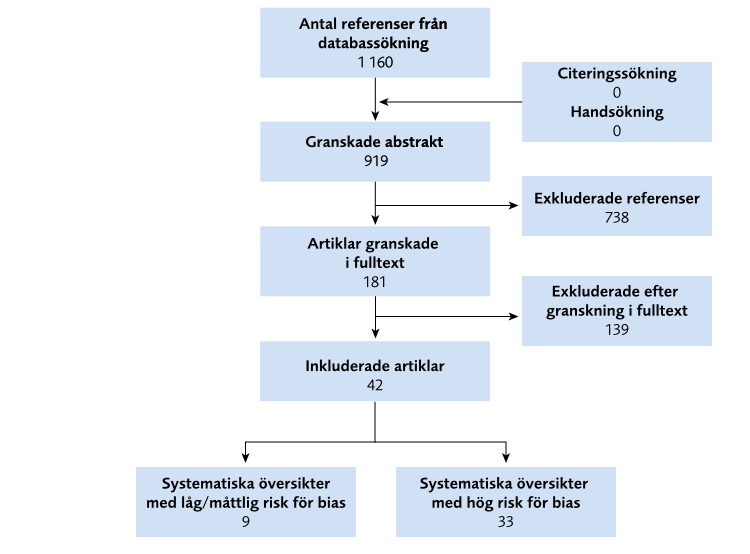
Bilaga 3 Exkluderade artiklar
| Excluded articles | Reason for exclusion |
|---|---|
| Systematic reviews | |
| Akhgarjand C, Asoudeh F, Bagheri A, Kalantar Z, Vahabi Z, Shab-Bidar S, et al. Does Ashwagandha supplementation have a beneficial effect on the management of anxiety and stress? A systematic review and meta-analysis of randomized controlled trials. Phytother Res. 2022;36(11):4115–24. Available from: https://doi.org/10.1002/ptr.7598 | Wrong population |
| Albuloshi T, Dimala CA, Kuhnle GGC, Bouhaimed M, Dodd GF, Spencer JPE. The effectiveness of vitamin D supplementation in reducing depressive symptoms: A systematic review and meta-analysis of Randomized Controlled Trials (RCTs). Nutr Healthy Aging. 2022;6(4):301–18. Available from: https://doi.org/10.3233/nha-200094 | Wrong population |
| AlGhamdi SA. Effectiveness of Vitamin D on Neurological and Mental Disorders. Diseases. 2024;12(6). Available from: https://doi.org/10.3390/diseases12060131 | Not a systematic review |
| Ali S, Corbi G, Maes M, Scapagnini G, Davinelli S. Exploring the Impact of Flavonoids on Symptoms of Depression: A Systematic Review and Meta-Analysis. Antioxidants (Basel). 2021;10(11):20. Available from: https://doi.org/10.3390/antiox10111644 | Relevant results not analysed separately |
| Alosaimi N, Sherar LB, Griffiths P, Pearson N. Clustering of diet, physical activity and sedentary behaviour and related physical and mental health outcomes: a systematic review. BMC Public Health. 2023;23(1):1572. Available from: https://doi.org/10.1186/s12889-023-16372-6 | Wrong population |
| Amirani E, Milajerdi A, Mirzaei H, Jamilian H, Mansournia MA, Hallajzadeh J, et al. The effects of probiotic supplementation on mental health, biomarkers of inflammation and oxidative stress in patients with psychiatric disorders: A systematic review and meta-analysis of randomized controlled trials. Complement Ther Med. 2020;49:102361. Available from: https://doi.org/10.1016/j.ctim.2020.102361 | Relevant results not analysed separately |
| Amiri S, Mahmood N, Javaid SF, Khan MA. The Effect of Lifestyle Interventions on Anxiety, Depression and Stress: A Systematic Review and Meta-Analysis of Randomized Clinical Trials. Healthcare (Basel). 2024;12(22). Available from: https://doi.org/10.3390/healthcare12222263 | Wrong intervention |
| Angelino D, Godos J, Ghelfi F, Tieri M, Titta L, Lafranconi A, et al. Fruit and vegetable consumption and health outcomes: an umbrella review of observational studies. Int J Food Sci Nutr. 2019;70(6):652–67. Available from: https://doi.org/10.1080/09637486.2019.1571021 | Not a systematic review |
| Appleton KM, Boxall LR, Adenuga-Ajayi O, Seyar DF. Does fruit and vegetable consumption impact mental health? Systematic review and meta-analyses of published controlled intervention studies. Br J Nutr. 2024;131(1):163–73. Available from: https://doi.org/10.1017/S0007114523001423 | Wrong population |
| Appleton KM, Hayward RC, Gunnell D, Peters TJ, Rogers PJ, Kessler D, et al. Effects of n-3 long-chain polyunsaturated fatty acids on depressed mood: systematic review of published trials. Am J Clin Nutr. 2006;84(6):1308–16. Available from: https://doi.org/10.1093/ajcn/84.6.1308 | Double entry |
| Aranburu E, Matias S, Simon E, Larretxi I, Martinez O, Bustamante MA, et al. Gluten and FODMAPs Relationship with Mental Disorders: Systematic Review. Nutrients. 2021;13(6):31. Available from: https://doi.org/10.3390/nu13061894 | Not a systematic review |
| Arsalandeh F, Shemirani F, Nazari MA, Mirmiran P, Golzarand M. Effect of low-carbohydrate diets on quality of life, mental health, and speed of memory in adults: a systematic review and meta-analysis of randomised controlled trials. Int J Food Sci Nutr. 2025;76(1):4–19. Available from: https://doi.org/10.1080/09637486.2024.2430006 | Wrong population |
| Aslam H, Lotfaliany M, So D, Berding K, Berk M, Rocks T, et al. Fiber intake and fiber intervention in depression and anxiety: a systematic review and meta-analysis of observational studies and randomized controlled trials. Nutr Rev. 2024;82(12):1678–95. Available from: https://doi.org/10.1093/nutrit/nuad143 | Wrong population |
| Bafkar N, Zeraattalab-Motlagh S, Jayedi A, Shab-Bidar S. Efficacy and safety of omega-3 fatty acids supplementation for anxiety symptoms: a systematic review and dose-response meta-analysis of randomized controlled trials. BMC Psychiatry. 2024;24(1):455. Available from: https://doi.org/10.1186/s12888-024-05881-2 | Wrong outcome |
| Bai ZG, Bo A, Wu SJ, Gai QY, Chi I. Omega-3 polyunsaturated fatty acids and reduction of depressive symptoms in older adults: A systematic review and meta-analysis. J Affect Disord. 2018;241:241–8. Available from: https://doi.org/10.1016/j.jad.2018.07.057 | Wrong population |
| Berthelot E, Etchecopar-Etchart D, Thellier D, Lancon C, Boyer L, Fond G. Fasting Interventions for Stress, Anxiety and Depressive Symptoms: A Systematic Review and Meta-Analysis. Nutrients. 2021;13(11):05. Available from: https://doi.org/10.3390/nu13113947 | Wrong population |
| Bizzozero-Peroni B, Martinez-Vizcaino V, Fernandez-Rodriguez R, Jimenez-Lopez E, Nunez de Arenas-Arroyo S, Saz-Lara A, et al. The impact of the Mediterranean diet on alleviating depressive symptoms in adults: a systematic review and meta-analysis of randomized controlled trials. Nutr Rev. 2025;83(1):29–39. Available from: https://doi.org/10.1093/nutrit/nuad176 | Not available in full text |
| Bloch MH, Hannestad J. Omega-3 fatty acids for the treatment of depression: systematic review and meta-analysis. Mol Psychiatry. 2012;17(12):1272–82. Available from: https://doi.org/10.1038/mp.2011.100 | Not a systematic review |
| Botturi A, Ciappolino V, Delvecchio G, Boscutti A, Viscardi B, Brambilla P. The Role and the Effect of Magnesium in Mental Disorders: A Systematic Review. Nutrients. 2020;12(6):03. Available from: https://doi.org/10.3390/nu12061661 | Not a systematic review |
| Brinsley J, O'Connor EJ, Singh B, McKeon G, Curtis R, Ferguson T, et al. Effectiveness of Digital Lifestyle Interventions on Depression, Anxiety, Stress, and Well-Being: Systematic Review and Meta-Analysis. J Med Internet Res. 2025;27:e56975. Available from: https://doi.org/10.2196/56975 | Wrong intervention |
| Burrows T, Teasdale S, Rocks T, Whatnall M, Schindlmayr J, Plain J, et al. Effectiveness of dietary interventions in mental health treatment: A rapid review of reviews. Nutr Diet. 2022;79(3):279–90. Available from: https://doi.org/10.1111/1747-0080.12754 | Not a systematic review |
| Busby E, Bold J, Fellows L, Rostami K. Mood Disorders and Gluten: It's Not All in Your Mind! A Systematic Review with Meta-Analysis. Nutrients. 2018;10(11):08. Available from: https://doi.org/10.3390/nu10111708 | Wrong population |
| Caballer García J, Torío Ojea E, Jimenez Treviño L, Sánchez Fernández S. Ácidos grasos omega-3 y depresión: una revisión sistemática. Psiquiatría Biológica. 2017;24(1):10–7. Available from: https://doi.org/10.1016/j.psiq.2016.12.001 | Wrong language |
| Cao B, Xu J, Li R, Teopiz KM, McIntyre RS, Chen H. Interventions targeting comorbid depression and overweight/obesity: A systematic review. J Affect Disord. 2022;314:222–32. Available from: https://doi.org/10.1016/j.jad.2022.07.027 | Wrong population |
| Cheng Q, Ran Y, Mo X, Xiao R, He D, Guo S, et al. The efficacy and acceptability of Lactobacillus reuteri for the treatment of depression: A systematic review and meta-analysis. Gen Hosp Psychiatry. 2025;95:122–32. Available from: https://doi.org/10.1016/j.genhosppsych.2025.05.004 | Wrong population |
| Cope EC, Levenson CW. Role of zinc in the development and treatment of mood disorders. Curr Opin Clin Nutr Metab Care. 2010;13(6):685–9. Available from: https://doi.org/10.1097/MCO.0b013e32833df61a | Not a systematic review |
| Cusimano J, VandenBerg A. Low-hanging fruit for getting back on your feet: A critical review of diet and exercise interventions for depression. J Affect Disord Rep. 2020;1. Available from: https://doi.org/10.1016/j.jadr.2020.100019 | Not a systematic review |
| da Silva LEM, de Santana MLP, Costa PRF, Pereira EM, Nepomuceno CMM, Queiroz VAO, et al. Zinc supplementation combined with antidepressant drugs for treatment of patients with depression: a systematic review and meta-analysis. Nutr Rev. 2021;79(1):1–12. Available from: https://doi.org/10.1093/nutrit/nuaa039 | Not available in full text |
| Deane KHO, Jimoh OF, Biswas P, O'Brien A, Hanson S, Abdelhamid AS, et al. Omega-3 and polyunsaturated fat for prevention of depression and anxiety symptoms: systematic review and meta-analysis of randomised trials. Br J Psychiatry. 2021;218(3):135–42. Available from: https://doi.org/10.1192/bjp.2019.234 | Relevant results not analysed separately |
| Derom ML, Sayon-Orea C, Martinez-Ortega JM, Martinez-Gonzalez MA. Magnesium and depression: a systematic review. Nutr Neurosci. 2013;16(5):191–206. Available from: https://doi.org/10.1179/1476830512Y.0000000044 | Not a systematic review |
| Dharmayani PNA, Juergens M, Allman-Farinelli M, Mihrshahi S. Association between Fruit and Vegetable Consumption and Depression Symptoms in Young People and Adults Aged 15-45: A Systematic Review of Cohort Studies. Int J Environ Res Public Health. 2021;18(2):18. Available from: https://doi.org/10.3390/ijerph18020780 | Wrong population |
| Dhingra S, Parle M. Herbal Remedies and Nutritional Supplements in the Treatment of Depression: A Review. Klinik Psikofarmakoloji Bülteni. 2016;22(3):286–92. Available from: https://doi.org/10.5455/bcp.20120729090446 | Not a systematic review |
| Dietch DM, Kerr-Gaffney J, Hockey M, Marx W, Ruusunen A, Young AH, et al. Efficacy of low carbohydrate and ketogenic diets in treating mood and anxiety disorders: systematic review and implications for clinical practice. BJPsych Open. 2023;9(3):e70. Available from: https://doi.org/10.1192/bjo.2023.36 | Relevant results not analysed separately |
| Dobersek U, Wy G, Adkins J, Altmeyer S, Krout K, Lavie CJ, et al. Meat and mental health: a systematic review of meat abstention and depression, anxiety, and related phenomena. Crit Rev Food Sci Nutr. 2021;61(4):622–35. Available from: https://doi.org/10.1080/10408398.2020.1741505 | Wrong population |
| Du Q, Li Q, Liu C, Liao G, Li J, Yang J, et al. Probiotics/prebiotics/synbiotics and human neuropsychiatric outcomes: an umbrella review. Benef Microbes. 2024;15(6):589–608. Available from: https://doi.org/10.1163/18762891-bja00035 | Not a systematic review |
| Dyall SC, Malau IA, Su KP. Omega-3 polyunsaturated fatty acids in depression: insights from recent clinical trials. Curr Opin Clin Nutr Metab Care. 2025;28(2):66–74. Available from: https://doi.org/10.1097/MCO.0000000000001077 | Wrong outcome |
| Ein N, Armstrong B, Vickers K. The effect of a very low calorie diet on subjective depressive symptoms and anxiety: meta-analysis and systematic review. Int J Obes (Lond). 2019;43(7):1444–55. Available from: https://doi.org/10.1038/s41366-018-0245-4 | Wrong population |
| Ejtahed HS, Mardi P, Hejrani B, Mahdavi FS, Ghoreshi B, Gohari K, et al. Association between junk food consumption and mental health problems in adults: a systematic review and meta-analysis. BMC Psychiatry. 2024;24(1):438. Available from: https://doi.org/10.1186/s12888-024-05889-8 | Wrong population |
| Eliby D, Simpson CA, Lawrence AS, Schwartz OS, Haslam N, Simmons JG. Associations between diet quality and anxiety and depressive disorders: A systematic review. Journal of Affective Disorders Reports. 2023;14:100629. Available from: https://doi.org/10.1016/j.jadr.2023.100629 | No synthesis |
| Fatahi S, Matin SS, Sohouli MH, Gaman MA, Raee P, Olang B, et al. Association of dietary fiber and depression symptom: A systematic review and meta-analysis of observational studies. Complement Ther Med. 2021;56:102621. Available from: https://doi.org/10.1016/j.ctim.2020.102621 | Wrong population |
| Fernandez-Rodriguez R, Martinez-Vizcaino V, Mesas AE, Notario-Pacheco B, Medrano M, Heilbronn LK. Does intermittent fasting impact mental disorders? A systematic review with meta-analysis. Crit Rev Food Sci Nutr. 2023;63(32):11169–84. Available from: https://doi.org/10.1080/10408398.2022.2088687 | Wrong population |
| Firth J, Marx W, Dash S, Carney R, Teasdale SB, Solmi M, et al. The Effects of Dietary Improvement on Symptoms of Depression and Anxiety: A Meta-Analysis of Randomized Controlled Trials. Psychosom Med. 2019;81(3):265–80. Available from: https://doi.org/10.1097/PSY.0000000000000673 | Relevant results not analysed separately |
| Firth J, Teasdale SB, Allott K, Siskind D, Marx W, Cotter J, et al. The efficacy and safety of nutrient supplements in the treatment of mental disorders: a meta-review of meta-analyses of randomized controlled trials. World Psychiatry. 2019;18(3):308–24. Available from: https://doi.org/10.1002/wps.20672 | Not a systematic review |
| Fusar-Poli L, Gabbiadini A, Ciancio A, Vozza L, Signorelli MS, Aguglia E. The effect of cocoa-rich products on depression, anxiety, and mood: A systematic review and meta-analysis. Crit Rev Food Sci Nutr. 2022;62(28):7905–16. Available from: https://doi.org/10.1080/10408398.2021.1920570 | Wrong population |
| Gao X, Su X, Han X, Wen H, Cheng C, Zhang S, et al. Unsaturated Fatty Acids in Mental Disorders: An Umbrella Review of Meta-Analyses. Adv Nutr. 2022;13(6):2217–36. Available from: https://doi.org/10.1093/advances/nmac084 | Not a systematic review |
| Gianfredi V, Dinu M, Nucci D, Eussen S, Amerio A, Schram MT, et al. Association between dietary patterns and depression: an umbrella review of meta-analyses of observational studies and intervention trials. Nutr Rev. 2023;81(3):346–59. Available from: https://doi.org/10.1093/nutrit/nuac058 | Not a systematic review |
| Glabska D, Guzek D, Groele B, Gutkowska K. Fruit and Vegetable Intake and Mental Health in Adults: A Systematic Review. Nutrients. 2020;12(1). Available from: https://doi.org/10.3390/nu12010115 | Wrong population |
| Grosso G, Micek A, Marventano S, Castellano S, Mistretta A, Pajak A, et al. Dietary n-3 PUFA, fish consumption and depression: A systematic review and meta-analysis of observational studies. J Affect Disord. 2016;205:269–81. Available from: https://doi.org/10.1016/j.jad.2016.08.011 | Wrong population |
| Guzek D, Kolota A, Lachowicz K, Skolmowska D, Stachon M, Glabska D. Effect of Vitamin D Supplementation on Depression in Adults: A Systematic Review of Randomized Controlled Trials (RCTs). Nutrients. 2023;15(4). Available from: https://doi.org/10.3390/nu15040951 | Relevant results not analysed separately |
| Hajhashemy Z, Shirani F, Askari G. Dietary Magnesium Intake in Relation to Depression in Adults: A GRADE-Assessed Systematic Review and Dose-Response Meta-analysis of Epidemiologic Studies. Nutr Rev. 2025;83(2):217–29. Available from: https://doi.org/10.1093/nutrit/nuae056 | Not available in full text |
| Haller H, Anheyer D, Cramer H, Dobos G. Complementary therapies for clinical depression: an overview of systematic reviews. BMJ Open. 2019;9(8):e028527. Available from: https://doi.org/10.1136/bmjopen-2018-028527 | Not a systematic review |
| Harbottle L, Schonfelder N. Nutrition and depression: A review of the evidence. J Ment Health. 2009;17(6):576–87. Available from: https://doi.org/10.1080/09638230701677746 | Not a systematic review |
| Harris RA, Fernando HA, Seimon RV, da Luz FQ, Gibson AA, Touyz SW, et al. Effects of total diet replacement programs on mental well-being: A systematic review with meta-analyses. Obes Rev. 2022;23(11):e13465. Available from: https://doi.org/10.1111/obr.13465 | Wrong population |
| Hashim MH, Ramli NNN, Nasarudin S, Abdul Mutalib M, Mohamad Alwi MN, Abd Rashed A, et al. Exploring the Link Between Vitamin K and Depression: A Systematic Review. Medicina (Kaunas). 2025;61(5):07. Available from: https://doi.org/10.3390/medicina61050861 | Relevant results not analysed separately |
| He J, Chang L, Zhang L, Wu W, Zhuo D. Effect of probiotic supplementation on cognition and depressive symptoms in patients with depression: A systematic review and meta-analysis. Medicine (Baltimore). 2023;102(47):e36005. Available from: https://doi.org/10.1097/MD.0000000000036005 | Wrong outcome |
| Hockey M, McGuinness AJ, Marx W, Rocks T, Jacka FN, Ruusunen A. Is dairy consumption associated with depressive symptoms or disorders in adults? A systematic review of observational studies. Crit Rev Food Sci Nutr. 2020;60(21):3653–68. Available from: https://doi.org/10.1080/10408398.2019.1703641 | Wrong population |
| Huang R, Wang K, Hu J. Effect of Probiotics on Depression: A Systematic Review and Meta-Analysis of Randomized Controlled Trials. Nutrients. 2016;8(8):06. Available from: https://doi.org/10.3390/nu8080483 | Wrong population |
| Jia S, Hou Y, Wang D, Zhao X. Flavonoids for depression and anxiety: a systematic review and meta-analysis. Crit Rev Food Sci Nutr. 2023;63(27):8839–49. Available from: https://doi.org/10.1080/10408398.2022.2057914 | Wrong population |
| Jorm AF, Christensen H, Griffiths KM, Rodgers B. Effectiveness of complementary and self-help treatments for depression. Med J Aust. 2002;176(10):S84–96. Available from: https://doi.org/10.5694/j.1326-5377.2002.tb04508.x | Not a systematic review |
| Kabthymer RH, Saadati S, Lee M, Hariharan R, Feehan J, Mousa A, et al. Carnosine/histidine-containing dipeptide supplementation improves depression and quality of life: systematic review and meta-analysis of randomized controlled trials. Nutr Rev. 2025;83(2):e54–e64. Available from: https://doi.org/10.1093/nutrit/nuae021 | Wrong population |
| Kalantidi V, Kantilafti M, Lamnisos D, Chrysostomou S. The impact of probiotic supplementation on depressive symptoms: a systematic review of clinical trials. The North African Journal of Food and Nutrition Research. 2024;8(18):106–17. Available from: https://doi.org/10.51745/najfnr.8.18.106-117 | No synthesis |
| Kamat D, Al-Ajlouni YA, Hall RCW. The Therapeutic Impact of Plant-Based and Nutritional Supplements on Anxiety, Depressive Symptoms and Sleep Quality among Adults and Elderly: A Systematic Review of the Literature. Int J Environ Res Public Health. 2023;20(6):15. Available from: https://doi.org/10.3390/ijerph20065171 | Wrong population |
| Kelaiditis CF, Gibson EL, Dyall SC. Effects of long-chain omega-3 polyunsaturated fatty acids on reducing anxiety and/or depression in adults; A systematic review and meta-analysis of randomised controlled trials. Prostaglandins Leukot Essent Fatty Acids. 2023;192:102572. Available from: https://doi.org/10.1016/j.plefa.2023.102572 | Relevant results not analysed separately |
| Klimova B, Novotny M, Valis M. The Impact of Nutrition and Intestinal Microbiome on Elderly Depression-A Systematic Review. Nutrients. 2020;12(3). Available from: https://doi.org/10.3390/nu12030710 | Wrong population |
| Koo H, Ishihara K, Kanejima Y, Nakatani M, Izawa KP. Impact of Dietary Interventions on Depression in Adolescents and Young Adults: A Systematic Review and Meta-Analysis. Psychiatry Int (Basel). 2025;6(2):62. Available from: https://doi.org/10.3390/psychiatryint6020062 | Relevant results not analysed separately |
| Kraguljac NV, Montori VM, Pavuluri M, Chai HS, Wilson BS, Unal SS. Efficacy of omega-3 fatty acids in mood disorders - A systematic review and metaanalysis. Psychopharmacol Bull. 2009;42(3):39–54. | Not available in full text |
| LaChance LR, Ramsey D. Antidepressant foods: An evidence-based nutrient profiling system for depression. World J Psychiatry. 2018;8(3):97–104. Available from: https://doi.org/10.5498/wjp.v8.i3.97 | Not a systematic review |
| Lai JS, Hiles S, Bisquera A, Hure AJ, McEvoy M, Attia J. A systematic review and meta-analysis of dietary patterns and depression in community-dwelling adults. Am J Clin Nutr. 2014;99(1):181–97. Available from: https://doi.org/10.3945/ajcn.113.069880 | Wrong population |
| Lane MM, Gamage E, Travica N, Dissanayaka T, Ashtree DN, Gauci S, et al. Ultra-Processed Food Consumption and Mental Health: A Systematic Review and Meta-Analysis of Observational Studies. Nutrients. 2022;14(13):21. Available from: https://doi.org/10.3390/nu14132568 | Wrong population |
| Lassale C, Batty GD, Baghdadli A, Jacka F, Sanchez-Villegas A, Kivimaki M, et al. Healthy dietary indices and risk of depressive outcomes: a systematic review and meta-analysis of observational studies. Mol Psychiatry. 2019;24(7):965–86. Available from: https://doi.org/10.1038/s41380-018-0237-8 | Wrong population |
| Lee ARYB, Tariq A, Lau G, Tok NWK, Tam WWS, Ho CSH. Vitamin E, Alpha-Tocopherol, and Its Effects on Depression and Anxiety: A Systematic Review and Meta-Analysis. Nutrients. 2022;14(3). Available from: https://doi.org/10.3390/nu14030656 | Relevant results not analysed separately |
| Li G, Mbuagbaw L, Samaan Z, Falavigna M, Zhang S, Adachi JD, et al. Efficacy of vitamin D supplementation in depression in adults: a systematic review. J Clin Endocrinol Metab. 2014;99(3):757–67. Available from: https://doi.org/10.1210/jc.2013-3450 | Wrong population |
| Liu RT, Walsh RFL, Sheehan AE. Prebiotics and probiotics for depression and anxiety: A systematic review and meta-analysis of controlled clinical trials. Neurosci Biobehav Rev. 2019;102:13–23. Available from: https://doi.org/10.1016/j.neubiorev.2019.03.023 | Relevant results not analysed separately |
| Liu Y, Yang R, Zhang N, Liu Q. The efficacy and safety of complementary and alternative medicine for depression: an umbrella review. Braz J Psychiatry. 2024;46:e20243705. Available from: https://doi.org/10.47626/1516-4446-2024-3705 | Not a systematic review |
| Ljungberg T, Bondza E, Lethin C. Evidence of the Importance of Dietary Habits Regarding Depressive Symptoms and Depression. Int J Environ Res Public Health. 2020;17(5):02. Available from: https://doi.org/10.3390/ijerph17051616 | Relevant results not analysed separately |
| Lu Y, Qiao D, Mi G. Clinical impacts of n-3 fatty acids supplementation on depression symptoms: an umbrella review of meta-analyses. Br J Nutr. 2024;131(5):841–50. Available from: https://doi.org/10.1017/S000711452300226X | Not a systematic review |
| Markun S, Gravestock I, Jager L, Rosemann T, Pichierri G, Burgstaller JM. Effects of Vitamin B12 Supplementation on Cognitive Function, Depressive Symptoms, and Fatigue: A Systematic Review, Meta-Analysis, and Meta-Regression. Nutrients. 2021;13(3):12. Available from: https://doi.org/10.3390/nu13030923 | Wrong population |
| Martins JG. EPA but not DHA appears to be responsible for the efficacy of omega-3 long chain polyunsaturated fatty acid supplementation in depression: evidence from a meta-analysis of randomized controlled trials. J Am Coll Nutr. 2009;28(5):525–42. Available from: https://doi.org/10.1080/07315724.2009.10719785 | Not a systematic review |
| Mazloomi SN, Talebi S, Mehrabani S, Bagheri R, Ghavami A, Zarpoosh M, et al. The association of ultra-processed food consumption with adult mental health disorders: a systematic review and dose-response meta-analysis of 260,385 participants. Nutr Neurosci. 2023;26(10):913–31. Available from: https://doi.org/10.1080/1028415X.2022.2110188 | Wrong population |
| Minayo MS, Miranda I, Telhado RS. A systematic review of the effects of probiotics on depression and anxiety: an alternative therapy? Cien Saude Colet. 2021;26(9):4087–99. Available from: https://doi.org/10.1590/1413-81232021269.21342020 | Wrong population |
| Molero P, De Lorenzi F, Gedek A, Strater C, Popescu E, Ortuno F, et al. Diet quality and depression risk: A systematic review and meta-analysis of prospective studies. J Affect Disord. 2025;382:154–66. Available from: https://doi.org/10.1016/j.jad.2025.03.162 | Wrong population |
| Moragrega I, Rios JL. Medicinal Plants in the Treatment of Depression. II: Evidence from Clinical Trials. Planta Med. 2022;88(12):1092–110. Available from: https://doi.org/10.1055/a-1517-6882 | No synthesis |
| Morán ACA, Díaz de León Castañeda C, Rodríguez Orozco AR, Valtierra Oba ER, Lemus Loeza BM, Galván Villalobos G. Efficacy of Probiotics, Prebiotics, and Symbiotics for the Treatment of Depression: A meta-review. Salud Ment (Mex). 2025;48(1):31–46. Available from: https://doi.org/10.17711/sm.0185-3325.2025.005 | Not a systematic review |
| Musazadeh V, Keramati M, Ghalichi F, Kavyani Z, Ghoreishi Z, Alras KA, et al. Vitamin D protects against depression: Evidence from an umbrella meta-analysis on interventional and observational meta-analyses. Pharmacol Res. 2023;187:106605. Available from: https://doi.org/10.1016/j.phrs.2022.106605 | Not a systematic review |
| Musazadeh V, Zarezadeh M, Faghfouri AH, Keramati M, Jamilian P, Jamilian P, et al. Probiotics as an effective therapeutic approach in alleviating depression symptoms: an umbrella meta-analysis. Crit Rev Food Sci Nutr. 2023;63(26):8292–300. Available from: https://doi.org/10.1080/10408398.2022.2051164 | Not a systematic review |
| Nadeem I, Rahman MZ, Ad-Dab'bagh Y, Akhtar M. Effect of probiotic interventions on depressive symptoms: A narrative review evaluating systematic reviews. Psychiatry Clin Neurosci. 2019;73(4):154–62. Available from: https://doi.org/10.1111/pcn.12804 | Not a systematic review |
| Nazarian A, Shidfar F, Dehnad A, Shahinfar H. Effect of dietary diversity on depression and depressive symptoms: a systematic review and meta-analysis of cross-sectional studies. BMC Public Health. 2025;25(1):2203. Available from: https://doi.org/10.1186/s12889-025-23240-y | Wrong control |
| Nikolova V, Zaidi SY, Young AH, Cleare AJ, Stone JM. Gut feeling: randomized controlled trials of probiotics for the treatment of clinical depression: Systematic review and meta-analysis. Ther Adv Psychopharmacol. 2019;9:2045125319859963. Available from: https://doi.org/10.1177/2045125319859963 | Double entry |
| Norouziasl R, Zeraattalab-Motlagh S, Jayedi A, Shab-Bidar S. Efficacy and safety of n-3 fatty acids supplementation on depression: a systematic review and dose-response meta-analysis of randomised controlled trials. Br J Nutr. 2024;131(4):658–71. Available from: https://doi.org/10.1017/S0007114523002052 | Relevant results not analysed separately |
| Norouziasl R, Zeraattalab-Motlagh S, Jayedi A, Shab-Bidar S. Efficacy and safety of n-3 fatty acids supplementation on depression: a systematic review and dose-response meta-analysis of randomised controlled trials. Br J Nutr. 2024;131(4):658–71. Available from: https://doi.org/10.1017/S0007114523002052 | Wrong population |
| O'Neill S, Minehan M, Knight-Agarwal CR, Turner M. Depression, Is It Treatable in Adults Utilising Dietary Interventions? A Systematic Review of Randomised Controlled Trials. Nutrients. 2022;14(7). Available from: https://doi.org/10.3390/nu14071398 | Relevant results not analysed separately |
| O'Neill S, Minehan M, Knight-Agarwal CR, Turner M. Depression, Is It Treatable in Adults Utilising Dietary Interventions? A Systematic Review of Randomised Controlled Trials. Nutrients. 2022;14(7). Available from: https://doi.org/10.3390/nu14071398 | Wrong population |
| Opie RS, O'Neil A, Itsiopoulos C, Jacka FN. The impact of whole-of-diet interventions on depression and anxiety: a systematic review of randomised controlled trials. Public Health Nutr. 2015;18(11):2074–93. Available from: https://doi.org/10.1017/S1368980014002614 | Relevant results not analysed separately |
| Ortega RM, Rodriguez-Rodriguez E, Lopez-Sobaler AM. Effects of omega 3 fatty acids supplementation in behavior and non-neurodegenerative neuropsychiatric disorders. Br J Nutr. 2012;107 Suppl 2:S261–70. Available from: https://doi.org/10.1017/S000711451200164X | Wrong population |
| Patsalos O, Keeler J, Schmidt U, Penninx B, Young AH, Himmerich H. Diet, Obesity, and Depression: A Systematic Review. J Pers Med. 2021;11(3):1–19. Available from: https://doi.org/10.3390/jpm11030176 | Wrong population |
| Pirbaglou M, Katz J, de Souza RJ, Stearns JC, Motamed M, Ritvo P. Probiotic supplementation can positively affect anxiety and depressive symptoms: a systematic review of randomized controlled trials. Nutr Res. 2016;36(9):889–98. Available from: https://doi.org/10.1016/j.nutres.2016.06.009 | Wrong population |
| Quirk SE, Williams LJ, O'Neil A, Pasco JA, Jacka FN, Housden S, et al. The association between diet quality, dietary patterns and depression in adults: a systematic review. BMC Psychiatry. 2013;13:175. Available from: https://doi.org/10.1186/1471-244X-13-175 | Wrong control |
| Rahe C, Unrath M, Berger K. Dietary patterns and the risk of depression in adults: a systematic review of observational studies. Eur J Nutr. 2014;53(4):997–1013. Available from: https://doi.org/10.1007/s00394-014-0652-9 | Wrong population |
| Rahmannia M, Poudineh M, Mirzaei R, Aalipour MA, Shahidi Bonjar AH, Goudarzi M, et al. Strain-specific effects of probiotics on depression and anxiety: a meta-analysis. Gut Pathog. 2024;16(1):46. Available from: https://doi.org/10.1186/s13099-024-00634-8 | Wrong intervention |
| Rajaie SH, Soltani S, Yazdanpanah Z, Zohrabi T, Beigrezaei S, Mohseni-Takalloo S, et al. Effect of exercise as adjuvant to energy-restricted diets on quality of life and depression outcomes: a meta-analysis of randomized controlled trials. Qual Life Res. 2022;31(11):3123–37. Available from: https://doi.org/10.1007/s11136-022-03146-7 | Wrong population |
| Raza ML, Hassan ST, Jamil S, Fatima W, Fatima M. Nutritional interventions in depression: The role of vitamin D and omega-3 fatty acids in neuropsychiatric health. Clin Nutr. 2025;45:270–80. Available from: https://doi.org/10.1016/j.clnu.2025.01.009 | Not a systematic review |
| Regina de Souza C, Luna Lazo RE, Mainka F, Zinco AG, Mengarda M, de Fátima Bonetti A, et al. Efficacy and safety of probiotics in the treatment of depression and anxiety: An umbrella review of systematic reviews of randomized clinical trials. PharmaNutrition. 2023;26. Available from: https://doi.org/10.1016/j.phanu.2023.100362 | Not a systematic review |
| Riediger ND, Othman RA, Suh M, Moghadasian MH. A systemic review of the roles of n-3 fatty acids in health and disease. J Am Diet Assoc. 2009;109(4):668–79. Available from: https://doi.org/10.1016/j.jada.2008.12.022 | Not a systematic review |
| Rocha Araujo DM, Vilarim MM, Nardi AE. What is the effectiveness of the use of polyunsaturated fatty acid omega-3 in the treatment of depression? Expert Rev Neurother. 2010;10(7):1117–29. Available from: https://doi.org/10.1586/ern.10.77 | Not available in full text |
| Rudzinska A, Perera I, Gryglewska B, Gasowski J, Piotrowicz K. Can the Mediterranean diet decrease the risk of depression in older persons - a systematic review. Psychiatr Pol. 2023;57(2):339–54. Available from: https://doi.org/10.12740/PP/OnlineFirst/140465 | Wrong control |
| Saghafian F, Hajishafiee M, Rouhani P, Saneei P. Dietary fiber intake, depression, and anxiety: a systematic review and meta-analysis of epidemiologic studies. Nutr Neurosci. 2023;26(2):108–26. Available from: https://doi.org/10.1080/1028415X.2021.2020403 | Wrong population |
| Saghafian F, Malmir H, Saneei P, Milajerdi A, Larijani B, Esmaillzadeh A. Fruit and vegetable consumption and risk of depression: accumulative evidence from an updated systematic review and meta-analysis of epidemiological studies. Br J Nutr. 2018;119(10):1087–101. Available from: https://doi.org/10.1017/S0007114518000697 | Wrong population |
| Saha S, Okafor H, Biediger-Friedman L, Behnke A. Association between diet and symptoms of anxiety and depression in college students: A systematic review. J Am Coll Health. 2023;71(4):1270–80. Available from: https://doi.org/10.1080/07448481.2021.1926267 | Wrong population |
| Sajjadi SS, Foshati S, Haddadian-Khouzani S, Rouhani MH. The role of selenium in depression: a systematic review and meta-analysis of human observational and interventional studies. Sci Rep. 2022;12(1):1045. Available from: https://doi.org/10.1038/s41598-022-05078-1 | Wrong population |
| Sanhueza C, Ryan L, Foxcroft DR. Diet and the risk of unipolar depression in adults: systematic review of cohort studies. J Hum Nutr Diet. 2013;26(1):56–70. Available from: https://doi.org/10.1111/j.1365-277X.2012.01283.x | Wrong population |
| Santos AC, Passos AFF, Holzbach LC, Cardoso BR, Santos MA, Coelho ASG, et al. Lack of sufficient evidence to support a positive role of selenium status in depression: a systematic review. Nutr Rev. 2022;29:29. Available from: https://doi.org/10.1093/nutrit/nuac095 | Not available in full text |
| Sarris J, Murphy J, Mischoulon D, Papakostas GI, Fava M, Berk M, et al. Adjunctive Nutraceuticals for Depression: A Systematic Review and Meta-Analyses. Am J Psychiatry. 2016;173(6):575–87. Available from: https://doi.org/10.1176/appi.ajp.2016.15091228 | Relevant results not analysed separately |
| Schefft C, Kilarski LL, Bschor T, Kohler S. Efficacy of adding nutritional supplements in unipolar depression: A systematic review and meta-analysis. Eur Neuropsychopharmacol. 2017;27(11):1090–109. Available from: https://doi.org/10.1016/j.euroneuro.2017.07.004 | Relevant results not analysed separately |
| Shaffer JA, Edmondson D, Wasson LT, Falzon L, Homma K, Ezeokoli N, et al. Vitamin D supplementation for depressive symptoms: a systematic review and meta-analysis of randomized controlled trials. Psychosom Med. 2014;76(3):190–6. Available from: https://doi.org/10.1097/PSY.0000000000000044 | Relevant results not analysed separately |
| Shafiei F, Salari-Moghaddam A, Larijani B, Esmaillzadeh A. Adherence to the Mediterranean diet and risk of depression: a systematic review and updated meta-analysis of observational studies. Nutr Rev. 2019;77(4):230–9. Available from: https://doi.org/10.1093/nutrit/nuy070 | Wrong population |
| Smith KS, Greene MW, Babu JR, Fruge AD. Psychobiotics as treatment for anxiety, depression, and related symptoms: a systematic review. Nutr Neurosci. 2021;24(12):963–77. Available from: https://doi.org/10.1080/1028415X.2019.1701220 | Wrong population |
| Solomou S, Logue J, Reilly S, Perez-Algorta G. A systematic review of the association of diet quality with the mental health of university students: implications in health education practice. Health Educ Res. 2023;38(1):28–68. Available from: https://doi.org/10.1093/her/cyac035 | Wrong population |
| Soltani S, Sangsefidi ZS, Asoudeh F, Torabynasab K, Zeraattalab-Motlagh S, Hejazi M, et al. Effect of Low-Fat Diet on Depression Score in Adults: A Systematic Review and Meta-Analysis of Randomized Controlled Clinical Trials. Nutr Rev. 2025;83(3):e741–e50. Available from: https://doi.org/10.1093/nutrit/nuae069 | Not available in full text |
| Spedding S. Vitamin D and depression: a systematic review and meta-analysis comparing studies with and without biological flaws. Nutrients. 2014;6(4):1501–18. Available from: https://doi.org/10.3390/nu6041501 | Not a systematic review |
| Su KP, Tseng PT, Lin PY, Okubo R, Chen TY, Chen YW, et al. Association of Use of Omega-3 Polyunsaturated Fatty Acids With Changes in Severity of Anxiety Symptoms: A Systematic Review and Meta-analysis. JAMA Netw Open. 2018;1(5):e182327. Available from: https://doi.org/10.1001/jamanetworkopen.2018.2327 | Wrong outcome |
| Tian YR, Deng CY, Xie HC, Long QJ, Yao Y, Deng Y, et al. Ultra-processed food intake and risk of depression: a systematic review. Nutr Hosp. 2023;40(1):160–76. Available from: https://doi.org/10.20960/nh.03723 | Wrong population |
| Tolkien K, Bradburn S, Murgatroyd C. An anti-inflammatory diet as a potential intervention for depressive disorders: A systematic review and meta-analysis. Clin Nutr. 2019;38(5):2045–52. Available from: https://doi.org/10.1016/j.clnu.2018.11.007 | Wrong population |
| Trincado J, Caneo C. Is augmentation with folate effective for major depressive disorder? Medwave. 2018;18(1):e7156. Available from: https://doi.org/10.5867/medwave.2018.01.7155 | Not a systematic review |
| Vaghef-Mehrabany E, Maleki V, Behrooz M, Ranjbar F, Ebrahimi-Mameghani M. Can psychobiotics "mood" ify gut? An update systematic review of randomized controlled trials in healthy and clinical subjects, on anti-depressant effects of probiotics, prebiotics, and synbiotics. Clin Nutr. 2020;39(5):1395–410. Available from: https://doi.org/10.1016/j.clnu.2019.06.004 | Wrong population |
| Varaee H, Darand M, Hassanizadeh S, Hosseinzadeh M. Effect of low-carbohydrate diet on depression and anxiety: A systematic review and meta-analysis of controlled trials. J Affect Disord. 2023;325:206–14. Available from: https://doi.org/10.1016/j.jad.2022.12.030 | Wrong population |
| Veronese N, Stubbs B, Solmi M, Ajnakina O, Carvalho AF, Maggi S. Acetyl-L-Carnitine Supplementation and the Treatment of Depressive Symptoms: A Systematic Review and Meta-Analysis. Psychosom Med. 2018;80(2):154–9. Available from: https://doi.org/10.1097/PSY.0000000000000537 | Wrong population |
| Wallace CJK, Milev R. The effects of probiotics on depressive symptoms in humans: a systematic review. Ann Gen Psychiatry. 2017;16(1):14. Available from: https://doi.org/10.1186/s12991-017-0138-2 | Wrong population |
| Williams AL, Cotter A, Sabina A, Girard C, Goodman J, Katz DL. The role for vitamin B-6 as treatment for depression: a systematic review. Fam Pract. 2005;22(5):532–7. Available from: https://doi.org/10.1093/fampra/cmi040 | Wrong population |
| Wolters M, von der Haar A, Baalmann AK, Wellbrock M, Heise TL, Rach S. Effects of n-3 Polyunsaturated Fatty Acid Supplementation in the Prevention and Treatment of Depressive Disorders-A Systematic Review and Meta-Analysis. Nutrients. 2021;13(4):25. Available from: https://doi.org/10.3390/nu13041070 | Double entry |
| Wong VW, Ho FY, Shi NK, Sarris J, Chung KF, Yeung WF. Lifestyle medicine for depression: A meta-analysis of randomized controlled trials. J Affect Disord. 2021;284:203–16. Available from: https://doi.org/10.1016/j.jad.2021.02.012 | Wrong population |
| Wu PY, Chen KM, Belcastro F. Dietary patterns and depression risk in older adults: systematic review and meta-analysis. Nutr Rev. 2021;79(9):976–87. Available from: https://doi.org/10.1093/nutrit/nuaa118 | Not available in full text |
| Wu PY, Lin MY, Tsai PS. Alternate healthy eating index and risk of depression: A meta-analysis and systemematic review. Nutr Neurosci. 2020;23(2):101–9. Available from: https://doi.org/10.1080/1028415X.2018.1477424 | Wrong population |
| Wu Y, Zhang L, Li S, Zhang D. Associations of dietary vitamin B1, vitamin B2, vitamin B6, and vitamin B12 with the risk of depression: a systematic review and meta-analysis. Nutr Rev. 2022;80(3):351–66. Available from: https://doi.org/10.1093/nutrit/nuab014 | Not available in full text |
| Xu Y, Zeng L, Zou K, Shan S, Wang X, Xiong J, et al. Role of dietary factors in the prevention and treatment for depression: an umbrella review of meta-analyses of prospective studies. Transl Psychiatry. 2021;11(1):478. Available from: https://doi.org/10.1038/s41398-021-01590-6 | Not a systematic review |
| Yang Y, Kim Y, Je Y. Fish consumption and risk of depression: Epidemiological evidence from prospective studies. Asia Pac Psychiatry. 2018;10(4):e12335. Available from: https://doi.org/10.1111/appy.12335 | Wrong population |
| Zahedi H, Djalalinia S, Sadeghi O, Zare Garizi F, Asayesh H, Payab M, et al. Breakfast consumption and mental health: a systematic review and meta-analysis of observational studies. Nutr Neurosci. 2022;25(6):1250–64. Available from: https://doi.org/10.1080/1028415X.2020.1853411 | Wrong population |
| Zandifar A, Badrfam R, Mohammaditabar M, Kargar B, Goodarzi S, Hajialigol A, et al. The Effect of Prebiotics and Probiotics on Levels of Depression, Anxiety, and Cognitive Function: A Meta-Analysis of Randomized Clinical Trials. Brain Behav. 2025;15(3):e70401. Available from: https://doi.org/10.1002/brb3.70401 | Wrong population |
| Zhao S, Liang S, Tao J, Peng Y, Chen S, Wai HKF, et al. Probiotics for adults with major depressive disorder compared with antidepressants: a systematic review and network meta-analysis. Nutr Rev. 2025;83(1):72–82. Available from: https://doi.org/10.1093/nutrit/nuad171 | Not available in full text |
| Zhao Z, Xiao G, Xia J, Guo H, Yang X, Jiang Q, et al. Effectiveness of probiotic/prebiotic/synbiotic treatments on anxiety: A systematic review and meta-analysis of randomized controlled trials. J Affect Disord. 2023;343:9–21. Available from: https://doi.org/10.1016/j.jad.2023.09.018 | Relevant results not analysed separately |
Bilaga 4 Risk för bias hos relevanta systematiska översikter
| Study | Step 1 | Step 2 | Step 3 | Step 4 | Step 5 | Overall |
|---|---|---|---|---|---|---|
 = Critical; = Critical;  = High; = High;  = Moderate; = Moderate;  = Low; = Low;  = Not assessed = Not assessed |
||||||
| Abukmail 2025 | |
|
|
|
|
|
| Almeida 2015 | |
|
|
|
|
|
| Appleton 2010 | |
|
|
|
|
|
| Appleton 2016 | |
|
|
|
|
|
| Asad 2025 | |
|
|
|
|
|
| Bae 2018 | |
|
|
|
|
|
| Bai 2020 | |
|
|
|
|
|
| Bayes 2020 | |
|
|
|
|
|
| Blampied 2020 | |
|
|
|
|
|
| Borges-Vieria 2023 | |
|
|
|
|
|
| Chambergo-Michilot 2021 | |
|
|
|
|
|
| Chen 2019 | |
|
|
|
|
|
| Cheng 2025 | |
|
|
|
|
|
| El Dib 2021 | |
|
|
|
|
|
| Fusar-Poli 2020 | |
|
|
|
|
|
| Ghaemi 2024 | |
|
|
|
|
|
| Goh 2019 | |
|
|
|
|
|
| Gowda 2015 | |
|
|
|
|
|
| Grosso 2014 | |
|
|
|
|
|
| Hofmeister 2021 | |
|
|
|
|
|
| Lai 2012 | |
|
|
|
|
|
| Lin 2023 | |
|
|
|
|
|
| Lin 2021 | |
|
|
|
|
|
| Lopresti 2014 | |
|
|
|
|
|
| Luo 2020 | |
|
|
|
|
|
| Mikola 2023 | |
|
|
|
|
|
| Mocking 2016 | |
|
|
|
|
|
| Moshfeghinia 2025 | |
|
|
|
|
|
| Ng 2018 | |
|
|
|
|
|
| Nikolova 2021 | |
|
|
|
|
|
| Noonan 2020 | |
|
|
|
|
|
| Swainson 2023 | |
|
|
|
|
|
| Tavakoly 2025 | |
|
|
|
|
|
| Vellekkatt 2019 | |
|
|
|
|
|
| Wang 2023 | |
|
|
|
|
|
| Wang 2024 | |
|
|
|
|
|
| Wolters 2021 | |
|
|
|
|
|
| Xie 2022 | |
|
|
|
|
|
| Yang 2024 | |
|
|
|
|
|
| Yosaee 2022 | |
|
|
|
|
|
| Zhang 2023 | |
|
|
|
|
|
| Zhu 2022 | |
|
|
|
|
|
The assessment tool is comprised of five steps based on the items in AMSTAR. To be assessed as low risk of bias, a systematic review has to fulfil all requirements for step 1 to 5. A systematic review is of moderate risk of bias if it fulfils all the requirements up to step 4. Systematic reviews that do not meet the requirements in one of the steps 1-4 are considered high risk of bias.
Risk-of-bias plot generated using robvis: McGuinness, LA, Higgins, JPT. Risk-of-bias VISualization (robvis): An R package and Shiny web app for visualizing risk-of-bias assessments. Res Syn Meth. 2020; 1- 7. https://doi.org/10.1002/jrsm.1411
 Statens beredning för medicinsk och social utvärdering
 Dela sidan på Facebook
 Dela sidan på LinkedIn
 Dela sidan via E-post
