
Kognitiv stimuleringsterapi (CST) i grupp för personer med demenssjukdom
Sammanställning av systematiska översikter från SBU:s upplysningstjänst
Fråga
Vilken effekt har manualbaserad kognitiv stimuleringsterapi (CST) i grupp för personer med demenssjukdom?
Frågeställare: Demenscentrum
Sammanfattning
Kunskapsläget
- Vi har identifierat en systematisk översikt som vi bedömer vara tillräckligt välgjord för att vi ska presentera resultaten.
- Översiktsförfattarna undersökte effekten av manualbaserad CST (kognitiv stimuleringsterapi) i grupp på i första hand kognitiv funktion, livskvalitet och neuropsykiatriska symtom hos personer med demenssjukdom.
- Översiktsförfattarna baserar sitt resultat på tio primärstudier, men studierna var generellt små och saknade långtidsuppföljning.
- Översiktsförfattarna drar slutsatsen att manualbaserad CST tycks ha en positiv effekt jämfört med kontrollgrupp på bland annat kognitiv funktion, men att fler och större studier behövs för att säkrare kunna uttala sig om effekterna, framför allt på längre sikt.
Vad betyder det här?
Det finns en systematisk översikt som undersökt effekten av manualbaserad CST i grupp. Översiktsförfattarna drar slutsatsen att personer med demens som genomför den här formen av CST uppvisar förbättrad kognitiv funktion, högre livskvalitet samt ökad förmåga att utföra aktiviteter i dagliga livet (ADL-förmåga), jämfört med en kontrollgrupp som ägnar dig åt andra aktiviteter. Däremot ser man ingen effekt på flera neuropsykiatriska symtom associerade med demens.
Bakgrund
Det finns många olika typer av demenssjukdomar, och cirka 130 000–150 000 personer i Sverige lever med någon typ av demenssjukdom. Gemensamt för alla demenssjukdomar är att nervceller i hjärnan dör, vilket leder till nedsatt kognitiv förmåga hos den sjuke. Det innebär bland annat sämre minne, svårare att planera, svårigheter att förstå sin omgivning och med tiden minskad förmåga att klara vardagliga saker. Risken att få demens ökar med åldern, och symtomen blir gradvis värre över tid [1]. Det finns inget botemedel mot demens. Behandlingen, som ibland kan bestå av läkemedel, går ut på att bromsa sjukdomsförloppet och stötta den sjuke och dess anhöriga i att bibehålla funktioner och hantera de symtom som uppstår.
Det finns flera olika interventioner för personer med demenssjukdom som syftar till att stärka den kognitiva funktionen. Kognitiv stimulans (CS) är ett samlingsnamn för aktiviteter och samtal, ofta i grupp, som ska förbättra den sjukes kognitiva och sociala förmåga. I slutet av 1990-talet utvecklades i Storbritannien ett manualbaserat grupprogram med sådana aktiviteter, kallat kognitiv stimuleringsterapi (CST). Programmet består av 14 träffar med olika innehåll, till exempel minnesträning, spel i grupp och samtal om aktuella händelser. I dag ingår CST i de nationella riktlinjerna för demensvård i Storbritannien. CST används också i många andra länder, både i sin ursprungsform och i anpassade varianter [2].
Frågeställning
Upplysningstjänsten har tillsammans med frågeställaren formulerat frågan enligt följande PICO1:
- Population: Personer med alla former av mild eller medelsvår demenssjukdom
- Intervention: Manualbaserad CST i grupp
- Control: Annan, eller ingen behandling
- Outcome: Kognitiv funktion, socialt samspel, demenssymtom, livskvalitet, humör, depression, effekt på närstående/anhörig som vårdar, minnesfunktion, tidsuppfattning, kommunikation och liknande utfall
Vi inkluderar systematiska översikter publicerade i vetenskapliga tidskrifter samt systematiska översikter från myndigheter och HTA-organisationer, som har publicerats på engelska eller ett av de skandinaviska språken.
1. PICO är en förkortning för patient/population/problem, intervention (insats, behandling)/, comparison/control (jämförelseintervention (insats, behandling)) och outcome (utfallsmått).
Resultat
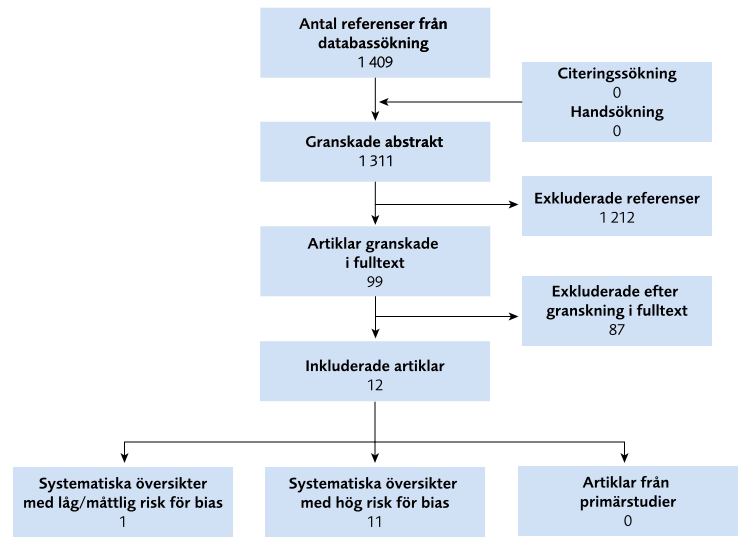
Vi inkluderade en systematisk översikt med måttlig risk för bias [3]. Det innebär att vi anser att den är tillräckligt välgjord för att presentera resultaten. Vi identifierade också elva översikter som var relevanta för frågan men som vi bedömde ha hög risk för bias [4-14]. Eftersom hög risk för bias innebär en betydande risk för att resultaten är missvisande presenterar vi inga resultat eller slutsatser från de översikterna.
Sökning och urval av studier, samt bedömning av risk för bias beskrivs i metodavsnittet. Resultaten har inte analyserats utifrån svenska förhållanden.
Chen och medförfattare publicerade år 2022 en systematisk översikt om effekten av manualbaserad CST (kognitiv stimuleringsterapi) i grupp för personer med demenssjukdom [3]. Översikten undersökte primärt utfallen kognitiv funktion, livskvalitet och neuropsykiatriska symptom. De sekundära utfallen som undersöktes var depression, ångest, språkförmåga och förmågan att klara aktiviteter i dagliga livet (ADL). Översiktsförfattarna inkluderade tio randomiserade kontrollerade studier (RCT-studier) i översikten, med totalt 1 274 deltagare. Studierna hade mellan 35 och 358 deltagare var. I studierna jämfördes manualbaserad CST i grupp med de vanliga aktiviteter som personerna annars deltog i, till exempel på äldreboenden eller i dagverksamheter. Studierna bedömdes ha låg eller måttlig risk för bias. Översiktsförfattarna rapporterade inte när studierna har mätt effekterna, men nämnde att det saknas studier med längre uppföljningstid.
Resultaten av metaanalyserna visade att manualbaserad CST i grupp har en statistiskt signifikant effekt på kognitiv förmåga, livskvalitet, språkförmåga och ADL-förmåga hos personer med demenssjukdom. Översiktsförfattarna bedömde inte hur tillförlitliga resultaten är, men påpekar att vissa resultat bör tolkas med försiktighet eftersom de bygger på få studier med få deltagare. Alla utfall analyserades med metaanalyser (Tabell 1).
Inkluderade översikter beskrivs i Tabell 1 nedan.
| CI = confidence interval; PwD = people with dementia; QoL = Quality of Life; RCT = randomised controlled trial; WMD = weigthed mean difference |
||
| Included studies | Population, Intervention, Control | Outcome and Results |
|---|---|---|
| Chen et al, 2022 [3] Effectiveness of cognitive stimulation therapy (CST) on cognition, quality of life and neuropsychiatric symptoms for patients living with dementia: A meta-analysis |
||
| 10 RCTs Setting: UK: 3 studies Italy: 3 studies Portugal: 1 study Japan: 1 study Ireland: 1 study China: 1 study |
Population: People with dementia Intervention: Use of CST in group following Spector’s protocol. Participants had to receive continuous, planned, and regular CST led by a professional researcher or specialist. Control: Usual care/usual activities sessions |
PRIMARY OUTCOMES: Cognitive function using the MMSE (Mini-Mental State Examination) (8 studies, n=1022) Statistically significant positive effect WMD: 1.98 (95% CI, 1.24 to 2.72, P<0.01) Cognitive function using the ADAS-Cog (Alzheimer’s Disease Assessment Scale- Cognitive) (7 studies, n=1048) No statistically significant effect WMD: 0.55 (95% CI, –3.04 to 4.14, P=0.76) Quality of life using the QOL-AD (Quality of Life —Alzheimer's Disease) (7 studies, n=968) Statistically significant positive effect WMD: 3.12 (95% CI, 2.52 to 3.72, P<0.01) Neuropsychiatric symptoms using the NPI (Neuropsychiatric Inventory) (2 studies, n=260) No statistically significant effect WMD: 0.23 (95% CI, –2.62 to 3.07, P=0.88) SECONDARY OUTCOMES: Depression using the GDS (Geriatric Depression Scale) and CSDD (Cornell Scale for Depression in Dementia) (5 studies, n=670) No statistically significant effect WMD: –0.12 (95% CI, –0.29 to 0.04, P=0.15) Anxiety using the RAID (Rating Anxiety in Dementia) (2 studies, n=228) No statistically significant effect WMD: –1.05 (95% CI, –3.85 to 1.75, P=0.46) Language ability using the NLT (Narrative Language Test) (2 studies, n=260) Statistically significant positive effect WMD: 2.71 (95% CI, 1.07 to 4.35, P<0.01) Activities of daily living using the DAD (Disability Assessment for Dementia) (3 studies, n=299) Statistically significant positive effect WMD: 7.27 (95% CI, 0.97 to 13.56, P<0.01) |
| Authors' conclusion: ”CST improved the cognitive ability, QoL, language and activities of daily living of PwD. However, the effect of neuropsychiatric symptoms on PwD requires further exploration […] Only 10 original studies were included in this meta-analysis, which is too few to draw definitive conclusions” |
||
SBU:s kommentarer
- Det finns flera systematiska översikter om interventioner som kallas kognitiv stimulans (CS) eller liknande. Dessa interventioner är dock inte alltid manualbaserade eller genomförs i grupp. De kan likna manualbaserad CST (kognitiv stimuleringsterapi), men skiljer sig åt i innehåll, längd, intensitet och utförande. I denna rapport har vi endast inkluderat översikter som specifikt undersökt manualbaserad CST i grupp.
Metod
Sökning
Upplysningstjänsten gör en systematisk sökning i minst två vetenskapliga databaser. Fullständig sökdokumentation finns i Bilaga 1.
Urval
Bedömning av vilka artiklar som är relevanta sker i två steg och utgår från frågeställningen.
- Två utredare läser titel och sammanfattning av alla identifierade artiklar från sökningen, och gör en oberoende bedömning av artiklarnas relevans.
- Artiklarna som valts ut i steg 1 läses i fulltext av två utredare, som gör en oberoende bedömning av artiklarnas relevans.
Skillnader i bedömningarna löses genom diskussion.
Flödesschema för urval av artiklar finns i Bilaga 2. Om artiklar har granskats i fulltext, finns de artiklar som inte bedömts vara relevanta listade i Bilaga 3.
Bedömning av risk för bias
Risk för bias i relevanta systematiska översikter bedöms av två utredare, oberoende av varandra. Skillnader i bedömningarna löses genom diskussion.
Vid bedömning används granskningsmallen SnabbSTAR2. SnabbSTAR2 har fem steg, där översikter som uppfyller de krav som ställs i steg 1–4 bedöms ha måttlig risk för bias, och om 1–5 är uppfyllda bedöms risken för bias vara låg.
En översikt som har brister i stegen 1–4 bedöms ha hög risk för bias och redovisas inte eftersom resultaten kan vara missvisande.
I de fall vi har identifierat relevanta artiklar och gjort en bedömning av risk för bias, redovisas detta i Bilaga 4. Granskningsmallen SnabbSTAR2 med manual finns tillgänglig på vår hemsida.
Vetenskapliga kunskapsluckor
Om sammanställd forskning av god kvalitet saknas registreras det som en vetenskaplig kunskapslucka i SBU:s databas över vetenskapliga kunskapsluckor. Kunskapsluckan kan bestå i att forskning helt saknas, att primärstudier finns men att det inte finns någon systematisk översikt, eller att de existerande systematiska översikterna inte bedöms leva upp till kraven för låg eller måttlig risk för bias.
Databasen över vetenskapliga kunskapsluckor kan nås via: https://www.sbu.se/sv/kunskapsluckor-sok/
Projektgrupp
Detta svar är sammanställt av Karin Olsson (utredare), Lisa Andersson (utredare), Laura Lintamo (utredare) Sara Fundell (projektadministratör), Emma Wojda (enhetschef) samt Göran Bertilsson (intern sakkunnig) vid SBU.
Referenser
- Om demenssjukdomar. Stockholm: Socialstyrelsen. [accessed May 19]. Available from: https://kunskapsguiden.se/omraden-och-teman/aldre/demenssjukdomar/om-demenssjukdomar/
- Woods B, Rai HK, Elliott E, Aguirre E, Orrell M, Spector A. Cognitive stimulation to improve cognitive functioning in people with dementia. Cochrane Database Syst Rev. 2023;1(1):CD005562. Available from: https://doi.org/10.1002/14651858.CD005562.pub3
- Chen X. Effectiveness of cognitive stimulation therapy (CST) on cognition, quality of life and neuropsychiatric symptoms for patients living with dementia: A meta-analysis. Geriatr Nurs. 2022;47:201–10. Available from: https://doi.org/10.1016/j.gerinurse.2022.07.012
- Cafferata RMT, Hicks B, von Bastian CC. Effectiveness of cognitive stimulation for dementia: A systematic review and meta-analysis. Psychol Bull. 2021;147(5):455–76. Available from: https://doi.org/10.1037/bul0000325
- Cammisuli DM, Danti S, Bosinelli F, Cipriani G. Non-pharmacological interventions for people with Alzheimer's Disease: A critical review of the scientific literature from the last ten years. Eur Geriatr Med. 2016;7(1):57–64. Available from: https://doi.org/10.1016/j.eurger.2016.01.002
- Chen J, Duan Y, Li H, Lu L, Liu J, Tang C. Different durations of cognitive stimulation therapy for Alzheimer's disease: a systematic review and meta-analysis. Clin Interv Aging. 2019;14:1243–54. Available from: https://doi.org/10.2147/CIA.S210062
- Cooper C, Mukadam N, Katona C, Lyketsos CG, Ames D, Rabins P, et al. Systematic review of the effectiveness of non-pharmacological interventions to improve quality of life of people with dementia. Int Psychogeriatr. 2012;24(6):856–70. Available from: https://doi.org/10.1017/S1041610211002614
- Desai R, Leung WG, Fearn C, John A, Stott J, Spector A. Effectiveness of Cognitive Stimulation Therapy (CST) for mild to moderate dementia: A systematic literature review and meta-analysis of randomised control trials using the original CST protocol. Ageing Res Rev. 2024;97:102312. Available from: https://doi.org/10.1016/j.arr.2024.102312
- Jimenez-Palomares M, Montero-Barrero O, Garrido-Ardila EM, Gibello-Rufo A, Gonzalez-Sanchez B, Rodriguez-Mansilla J. Cognitive Stimulation in Older Adults with Dementia: A Systematic Review. J Clin Med. 2025;14(20). Available from: https://doi.org/10.3390/jcm14207225
- Lu YT, Zhang X, Cheng J. Meta-analysis of the effect of cognitive stimulation therapy on cognitive function in patients with Alzheimer's disease. World J Psychiatry. 2025;15(4):102542. Available from: https://doi.org/10.5498/wjp.v15.i4.102542
- Luo G, Zhang J, Song Z, Wang Y, Wang X, Qu H, et al. Effectiveness of non-pharmacological therapies on cognitive function in patients with dementia-A network meta-analysis of randomized controlled trials. Front Aging Neurosci. 2023;15:1131744. Available from: https://doi.org/10.3389/fnagi.2023.1131744
- Luxton D, Thorpe N, Crane E, Warne M, Cornwall O, El-Dalil D, et al. Systematic review of the efficacy of pharmacological and non-pharmacological interventions for improving quality of life of people with dementia. Br J Psychiatry. 2026;228(1):55–67. Available from: https://doi.org/10.1192/bjp.2025.11
- Saragih ID, Tonapa SI, Saragih IS, Lee BO. Effects of cognitive stimulation therapy for people with dementia: A systematic review and meta-analysis of randomized controlled studies. Int J Nurs Stud. 2022;128:104181. Available from: https://doi.org/10.1016/j.ijnurstu.2022.104181
- Sun Y, Zhang X, Wang Z. Comparative Effectiveness of 3 Settings of Cognitive Stimulation Therapy on Cognition and Quality of Life for People With Dementia: A Systematic Review and Network Meta-analysis. J Am Med Dir Assoc. 2022;23(3):461–7 e11. Available from: https://doi.org/10.1016/j.jamda.2021.11.015
Bilaga 1 Dokumentation av sökstrategier
Upplysningstjänsten har gjort sökningar i databaserna Medline (Ovid), Scopus samt i INAHTA1:s databas för HTA2-rapporter. Vi har även handsökt publikationer på webbsidor för regionala HTA-organisationer och myndigheter.
Sökningen har begränsats till systematiska översikter.
Nedan redovisas sökningen som gjorts i de vetenskapliga databaserna.
1. International Network of Agencies for Health Technology Assessment (INAHTA)
2. Utvärdering av hälso- och sjukvårdens (och i SBU:s fall socialtjänstens) metoder (engelska: Health Technology Assessment)
Medline via OvidSP 13 Feb 2026
| / = Term from the MeSH controlled vocabulary; .sh = Term from the MeSH controlled vocabulary; exp = Term from MeSH including terms found below this term in the MeSH hierarchy; .ti,ab = Title or abstract; .tw = Title or abstract; .kf = Keywords; .kw = Keywords, exact; .bt = Book title. NLM Bookshelf; .pt = Publication type; .ja = Journal abbreviation; .af = All fields; adjn = Adjacent. Proximity operator retrieving adjacent words, adj3 retrieves records with search terms within two terms from each other; * or $ = Truncation; “ “ = Citation Marks; searches for an exact phrase | ||
| Search terms | Items found | |
|---|---|---|
| Population: | ||
| 1. | exp Dementia/ or Delirium/ or Cognitive Dysfunction/ or Wernicke Encephalopathy/ or Amnesia/ or Cognition Disorders/ or Alzheimer Disease/ or Huntington Disease/ | 343 136 |
| 2. | (dement* or alzheimer* or amentia* or pseudodement* or mild cognitive impairment or (lewy* adj2 bod*) or mild neurocognitive disorder* or cognitive dysfunction* or memory impairment* or deliri* or (chronic adj2 cerebrovascular) or huntington* or binswanger* or korsako*).ti,ab,kf,bt. | 425 752 |
| 3. | 1 or 2 | |
| Intervention: | ||
| 4. | (CST or cognitiv* therap* or cognitiv* stimul* or memory group* or memory support or (memory adj3 therap*) or (memory adj3 stimulat*) or cognitive psycho-stimulation or cognitive psychostimulation).ti,ab,kf,bt. | 16 517 |
| Study types: | ||
| 5. | (Systematic Review/ or Meta-Analysis/ or Cochrane Database Syst Rev.ja. or (((systematic or realist or integrative or mixed method* or umbrella) adj4 (review)) or "meta analys*" or metaanalys*).ti,bt,ab.) not (editorial/ or letter/ or case reports/) | 597 995 |
| Final result | ||
| 6. | 3 AND 4 AND 5 | 222 |
Scopus via scopus.com 13 Feb 2026
| TITLE-ABS-KEY = Title, abstract or keywords (including indexed keywords and author keywords); ALL = All fields; W/n = Within. Proximity operator retrieving terms within n words from each other; PRE/n = Precedes by. Proximity operator, the first term in the search must precede the second by n words; LIMIT-TO (X) = Includes only results of specified type, e.g., publication type or time range; DOCTYPE = Publication type; “re” = review; “le” = letter; “ed” = editorial; “ch” = book chapter; “cp” = conference proceedings; * = Truncation; “ “ = Citation Marks; searches for an exact phrase | ||
| Search terms | Items found | |
|---|---|---|
| Population: | ||
| 1. | TITLE-ABS-KEY ((dement* OR alzheimer* OR amentia* OR pseudodement* OR "mild cognitive impairment" OR (lewy* W/1 bod*) OR "mild neurocognitive disorder*" OR "cognitive dysfunction*" OR "memory impairment*" OR deliri* OR (chronic W/1 cerebrovascular) OR huntington* OR binswanger* OR korsako*)) | 655 051 |
| Intervention: | ||
| 2. | TITLE-ABS-KEY ("cst" OR "cognitive stimulation therapy" OR (cognitiv* W/1 therap*) OR (cognitiv* W/1 stimul*) OR memory group* OR (memory W/2 support*) OR (memory W/2 therap*) OR (memory W/2 stimulat*) OR "cognitive psycho-stimulation" OR "cognitive psychostimulation") | 199 004 |
| Study types: systematic reviews and meta-analysis / randomized controlled trials | ||
| 3. | TITLE-ABS-KEY (((systematic OR realist OR integrative OR “mixed method*” or umbrella) W/3 review) OR "meta analy*" OR metaanaly*) AND (EXCLUDE (DOCTYPE, “le”) OR EXCLUDE (DOCTYPE, “ed”) OR EXCLUDE (DOCTYPE, “ch”) OR EXCLUDE (DOCTYPE, “cp”)) | 899 881 |
| Final result | ||
| 4. | 1 AND 2 AND 2 | 1 187 |
Bilaga 2 Flödesschema för urval av artiklar
Bilaga 3 Exkluderade artiklar
| Excluded articles | Reason for exclusion |
|---|---|
| Systematic reviews | |
| Abraha I, Rimland JM, Trotta FM, Dell'Aquila G, Cruz-Jentoft A, Petrovic M, et al. Systematic review of systematic reviews of non-pharmacological interventions to treat behavioural disturbances in older patients with dementia. The SENATOR-OnTop series. BMJ Open. 2017;7(3):e012759. Available from: https://doi.org/10.1136/bmjopen-2016-012759 | Wrong study design |
| Aguirre E, Woods RT, Spector A, Orrell M. Cognitive stimulation for dementia: a systematic review of the evidence of effectiveness from randomised controlled trials. Ageing Res Rev. 2013;12(1):253–62. Available from: https://doi.org/10.1016/j.arr.2012.07.001 | Wrong intervention |
| Bahar-Fuchs A, Martyr A, Goh AM, Sabates J, Clare L. Cognitive training for people with mild to moderate dementia. Cochrane Database Syst Rev. 2019;3(3):CD013069. Available from: https://doi.org/10.1002/14651858.CD013069.pub2 | Wrong intervention |
| Bates J, Boote J, Beverley C. Psychosocial interventions for people with a milder dementing illness: a systematic review. J Adv Nurs. 2004;45(6):644–58. Available from: https://doi.org/10.1046/j.1365-2648.2003.02959.x | Wrong intervention |
| Beyene DA, Berha AB. Management Practice and Clinical Outcomes of Dementia in Sub-Saharan Africa: A Systematic Review. Behav Neurol. 2023;2023:2307443. Available from: https://doi.org/10.1155/2023/2307443 | No synthesis |
| Burley CV, Burns K, Lam BCP, Brodaty H. Nonpharmacological approaches reduce symptoms of depression in dementia: A systematic review and meta-analysis. Ageing Res Rev. 2022;79:101669. Available from: https://doi.org/10.1016/j.arr.2022.101669 | Wrong intervention |
| Butler M, McCreedy E, Nelson VA, Desai P, Ratner E, Fink HA, et al. Does Cognitive Training Prevent Cognitive Decline?: A Systematic Review. Ann Intern Med. 2018;168(1):63–8. Available from: https://doi.org/10.7326/M17-1531 | Wrong intervention |
| Butler R, Radhakrishnan R. Dementia. BMJ clinical evidence. 2012;2012. | Wrong intervention |
| Cabrera E, Sutcliffe C, Verbeek H, Saks K, Soto-Martin M, Meyer G, et al. Non-pharmacological interventions as a best practice strategy in people with dementia living in nursing homes. A systematic review. Eur Geriatr Med. 2015;6(2):134–50. Available from: https://doi.org/10.1016/j.eurger.2014.06.003 | Wrong intervention |
| Cai Y, Li L, Xu C, Wang Z. The Effectiveness of Non-Pharmacological Interventions on Apathy in Patients With Dementia: A Systematic Review of Systematic Reviews. Worldviews Evid Based Nurs. 2020;17(4):311–8. Available from: https://doi.org/10.1111/wvn.12459 | Wrong study design |
| Calderone A, Marra A, De Luca R, Latella D, Corallo F, Quartarone A, et al. Multisensory Stimulation in Rehabilitation of Dementia: A Systematic Review. Biomedicines. 2025;13(1). Available from: https://doi.org/10.3390/biomedicines13010149 | Wrong intervention |
| Cao Y, Wang N, Zhang Q, Shen N, Bai J, Luo X, et al. Effects of cognitive stimulation therapy on patients with dementia: An umbrella review of systematic reviews and meta-analyses. Exp Gerontol. 2023;177:112197. Available from: https://doi.org/10.1016/j.exger.2023.112197 | Wrong study design |
| Carrion C, Aymerich M, Bailles E, Lopez-Bermejo A. Cognitive psychosocial intervention in dementia: a systematic review. Dement Geriatr Cogn Disord. 2013;36(5-6):363–75. Available from: https://doi.org/10.1159/000354365 | Wrong intervention |
| Carrion C, Folkvord F, Anastasiadou D, Aymerich M. Cognitive Therapy for Dementia Patients: A Systematic Review. Dement Geriatr Cogn Disord. 2018;46(1-2):1–26. Available from: https://doi.org/10.1159/000490851 | Wrong intervention |
| Castro CB, Costa LM, Dias CB, Chen J, Hillebrandt H, Gardener SL, et al. Multi-Domain Interventions for Dementia Prevention - A Systematic Review. J Nutr Health Aging. 2023;27(12):1271–80. Available from: https://doi.org/10.1007/s12603-023-2046-2 | Wrong intervention |
| Chan JYC, Chan TK, Kwok TCY, Wong SYS, Lee ATC, Tsoi KKF. Cognitive training interventions and depression in mild cognitive impairment and dementia: a systematic review and meta-analysis of randomized controlled trials. Age Ageing. 2020;49(5):738–47. Available from: https://doi.org/10.1093/ageing/afaa063 | Wrong intervention |
| Chandler MJ, Parks AC, Marsiske M, Rotblatt LJ, Smith GE. Everyday Impact of Cognitive Interventions in Mild Cognitive Impairment: a Systematic Review and Meta-Analysis. Neuropsychol Rev. 2016;26(3):225–51. Available from: https://doi.org/10.1007/s11065-016-9330-4 | Wrong intervention |
| Chen LH, Lee OL, Lee YW, Ng ST, Ngai SYE, Pau YHZ, et al. Effectiveness of cognitive stimulation for individuals with mild cognitive impairment: a systematic review and meta-analysis. BMJ Open. 2025;15(6):e090767. Available from: https://doi.org/10.1136/bmjopen-2024-090767 | Wrong intervention |
| Chow G, Gan JKE, Chan JKY, Wu XV, Klainin-Yobas P. Effectiveness of psychosocial interventions among older adults with mild cognitive impairment: a systematic review and meta-analysis. Aging Ment Health. 2021;25(11):1986–97. Available from: https://doi.org/10.1080/13607863.2020.1839861 | Wrong intervention |
| Clarkson P, Hughes J, Xie C, Larbey M, Roe B, Giebel CM, et al. Overview of systematic reviews: Effective home support in dementia care, components and impacts-Stage 1, psychosocial interventions for dementia. J Adv Nurs. 2017;73(12):2845–63. Available from: https://doi.org/10.1111/jan.13362 | Wrong study design |
| Coley N, Giulioli C, Aisen PS, Vellas B, Andrieu S. Randomised controlled trials for the prevention of cognitive decline or dementia: A systematic review. Ageing Res Rev. 2022;82:101777. Available from: https://doi.org/10.1016/j.arr.2022.101777 | Wrong intervention |
| Cooper C, Li R, Lyketsos C, Livingston G. Treatment for mild cognitive impairment: systematic review. Br J Psychiatry. 2013;203(3):255–64. Available from: https://doi.org/10.1192/bjp.bp.113.127811 | Wrong intervention |
| Dou J, Zhang H, Fu X, Yang Y, Gao X. Optimal dose and type of non-pharmacological treatments to improve cognitive function in people with Alzheimer's disease: a systematic review and network meta-analysis. Aging Ment Health. 2025;29(2):228–37. Available from: https://doi.org/10.1080/13607863.2024.2379427 | Wrong intervention |
| Duan Y, Lu L, Chen J, Wu C, Liang J, Zheng Y, et al. Psychosocial interventions for Alzheimer's disease cognitive symptoms: a Bayesian network meta-analysis. BMC Geriatr. 2018;18(1):175. Available from: https://doi.org/10.1186/s12877-018-0864-6 | Wrong intervention |
| Eaglestone G, Gkaintatzi E, Jiang H, Stoner C, Pacella R, McCrone P. Cost-Effectiveness of Non-pharmacological Interventions for Mild Cognitive Impairment and Dementia: A Systematic Review of Economic Evaluations and a Review of Reviews. Pharmacoecon Open. 2023;7(6):887–914. Available from: https://doi.org/10.1007/s41669-023-00440-z | Wrong outcomes |
| Fisher E, Chick I, Fossey J, Spector A. Barriers and Facilitators to Implementing Cognitive Stimulation and Reminiscence Therapy for Dementia in Care Homes: Systematic Review. Int J Geriatr Psychiatry. 2025;40(7):e70124. Available from: https://doi.org/10.1002/gps.70124 | Wrong study design |
| Folkerts AK, Roheger M, Franklin J, Middelstädt J, Kalbe E. Cognitive interventions in patients with dementia living in long-term care facilities: Systematic review and meta-analysis. Arch Gerontol Geriatr. 2017;73:204–21. Available from: https://doi.org/10.1016/j.archger.2017.07.017 | Wrong intervention |
| Forte G, Favieri F, Corbo I, Chirico I, Chattat R, Vedova AMD, et al. Evaluating the Effectiveness of Cognitive Interventions for Healthy and Mild Cognitive Impairment Adults: A Comprehensive Umbrella Meta-Analysis. J Aging Res. 2025;2025(1):4397025. Available from: https://doi.org/10.1155/jare/4397025 | Wrong study design |
| Forte L, Despini G, Quartarone M, Calabrese L, Brigiano M, Trolese S, et al. Cognitive and Non-Cognitive Predictors of Response to Cognitive Stimulation Interventions in Dementia: A Systematic Review Aiming for Personalization. Behav Sci (Basel). 2025;15(8). Available from: https://doi.org/10.3390/bs15081069 | Relevant results not analysed separately |
| Fukushima RLM, do Carmo EG, Pedroso RDV, Micali PN, Donadelli PS, Fuzaro GJ, et al. Effects of cognitive stimulation on neuropsychiatric symptoms in elderly with Alzheimer's disease: A systematic review. Dement Neuropsychol. 2016;10(3):178–84. Available from: https://doi.org/10.1590/S1980-5764-2016DN1003003 | Wrong intervention |
| Garrido-Pedrosa J, Sala I, Obradors N. Effectiveness of cognition-focused interventions in activities of daily living performance in people with dementia: A systematic review. Br J Occup Ther. 2017;80(7):397–408. Available from: https://doi.org/10.1177/0308022617698166 | Wrong intervention |
| Gavelin HM, Lampit A, Hallock H, Sabates J, Bahar-Fuchs A. Cognition-Oriented Treatments for Older Adults: a Systematic Overview of Systematic Reviews. Neuropsychol Rev. 2020;30(2):167–93. Available from: https://doi.org/10.1007/s11065-020-09434-8 | Wrong study design |
| Gheysari F, Mazaheri M. The Effectiveness of Computerized and Classical Cognitive Interventions on the Cognitive Functions of Iranian Older Adults: A Systematic Review and Meta-Analysis. Salmand. 2025;20(2):0–. Available from: https://doi.org/10.32598/sija.2024.3272.2 | Wrong intervention |
| Giaquinto F, Iaia M, Rizzi E, Macchitella L, Romano DL, Tosi G, et al. Cognitive training for Alzheimer's disease and other forms of dementia: Insights from a systematic review and Bayesian meta-analysis. J Alzheimers Dis. 2025;105(4):1252–74. Available from: https://doi.org/10.1177/13872877251334795 | Wrong intervention |
| Gibbor L, Yates L, Volkmer A, Spector A. Cognitive stimulation therapy (CST) for dementia: a systematic review of qualitative research. Aging Ment Health. 2021;25(6):980–90. Available from: https://doi.org/10.1080/13607863.2020.1746741 | Wrong study design |
| Gomez-Soria I, Iguacel I, Aguilar-Latorre A, Peralta-Marrupe P, Latorre E, Zaldivar JNC, et al. Cognitive stimulation and cognitive results in older adults: A systematic review and meta-analysis. Arch Gerontol Geriatr. 2023;104:104807. Available from: https://doi.org/10.1016/j.archger.2022.104807 | Wrong intervention |
| Gomez-Soria I, Iguacel I, Cuenca-Zaldivar JN, Aguilar-Latorre A, Peralta-Marrupe P, Latorre E, et al. Cognitive stimulation and psychosocial results in older adults: A systematic review and meta-analysis. Arch Gerontol Geriatr. 2023;115:105114. Available from: https://doi.org/10.1016/j.archger.2023.105114 | Relevant results not analysed separately |
| Gomez-Soria I, Peralta-Marrupe P, Calatayud-Sanz E, Latorre E. Efficacy of cognitive intervention programs in amnesic mild cognitive impairment: A systematic review. Arch Gerontol Geriatr. 2021;94:104332. Available from: https://doi.org/10.1016/j.archger.2020.104332 | Wrong intervention |
| Guicheteau J, Seven US, Boes J, Monsef I, Kopke S, Folkerts AK, et al. Characteristics of complex non-pharmacological interventions for cognitive stimulation in people with mild to moderate dementia in nursing homes: A systematic review. Geriatr Nurs. 2025;66(Pt A):103586. Available from: https://doi.org/10.1016/j.gerinurse.2025.103586 | No synthesis |
| Guzzon A, Rebba V, Paccagnella O, Rigon M, Boniolo G. The value of supportive care: A systematic review of cost-effectiveness of nonpharmacological interventions for dementia. PLoS ONE. 2023;18(5 May). Available from: https://doi.org/10.1371/journal.pone.0285305 | Wrong outcomes |
| Herrera Montoya V, Santos de Carvalho RL, Bertrand E, Naylor R, Spector A, Mograbi DC. Barriers and Facilitators for the Adaptation and Implementation of Cognitive Stimulation Therapy: A Systematic Review. J Geriatr Psychiatry Neurol. 2026:8919887261416029. Available from: https://doi.org/10.1177/08919887261416029 | Wrong study design |
| Hindle JV, Petrelli A, Clare L, Kalbe E. Nonpharmacological enhancement of cognitive function in Parkinson's disease: a systematic review. Mov Disord. 2013;28(8):1034–49. Available from: https://doi.org/10.1002/mds.25377 | Wrong intervention |
| Huntley J, Gould RL, Liu K, Smith M, Howard RJ. Do cognitive interventions improve general cognition in dementia? A meta-analysis and meta-regression. BMJ Open. 2015;5(4). Available from: https://doi.org/10.1136/bmjopen-2014-005247 | Wrong intervention |
| James T, Mukadam N, Sommerlad A, Guerra Ceballos S, Livingston G. Culturally tailored therapeutic interventions for people affected by dementia: a systematic review and new conceptual model. Lancet Healthy Longev. 2021;2(3):e171–e9. Available from: https://doi.org/10.1016/S2666-7568(21)00001-5 | Wrong intervention |
| Jean L, Bergeron ME, Thivierge S, Simard M. Cognitive intervention programs for individuals with mild cognitive impairment: systematic review of the literature. Am J Geriatr Psychiatry. 2010;18(4):281–96. Available from: https://doi.org/10.1097/JGP.0b013e3181c37ce9 | Wrong intervention |
| Jin B, Xv Y, Zhang B, Qiao L, Liu H. Comparative efficacy and acceptability of treatments for depressive symptoms in cognitive impairment: A systematic review and Bayesian network meta-analysis. Front Aging Neurosci. 2022;14:1037414. Available from: https://doi.org/10.3389/fnagi.2022.1037414 | Wrong intervention |
| Kim K, Han JW, So Y, Seo J, Kim YJ, Park JH, et al. Cognitive Stimulation as a Therapeutic Modality for Dementia: A Meta-Analysis. Psychiatry Investig. 2017;14(5):626–39. Available from: https://doi.org/10.4306/pi.2017.14.5.626 | Wrong intervention |
| Kim Y, Cho E. Non-pharmacological Intervention for Wandering Behavior in Dementia: A Systematic Review and Meta-analysis. J Korean Gerontol Nurs. 2022;24(3):321–34. Available from: https://doi.org/10.17079/jkgn.2022.24.3.321 | Wrong language |
| Kurz AF, Leucht S, Lautenschlager NT. The clinical significance of cognition-focused interventions for cognitively impaired older adults: a systematic review of randomized controlled trials. Int Psychogeriatr. 2011;23(9):1364–75. Available from: https://doi.org/10.1017/S1041610211001001 | Wrong intervention |
| Lauritzen J, Nielsen LM, Kvande ME, Brammer Damsgaard J, Gregersen R. Carers' experience of everyday life impacted by people with dementia who attended a cognitive stimulation therapy (CST) group intervention: a qualitative systematic review. Aging Ment Health. 2023;27(2):343–9. Available from: https://doi.org/10.1080/13607863.2022.2046699 | Wrong study design |
| Liang J-H, Li J-Y, Jia R-X, Wang Y-Q, Wu R-K, Zhang H-B, et al. Comparison of Cognitive Intervention Strategies for Older Adults With Mild to Moderate Alzheimer's Disease: A Bayesian Meta-analytic Review. J Am Med Dir Assoc. 2019;20(3):347–55. Available from: https://doi.org/10.1016/j.jamda.2018.09.017 | Wrong intervention |
| Liang JH, Lin L, Wang YQ, Jia RX, Qu XY, Li J, et al. Non-pharmacological therapeutic strategy options for patients with dementia based on cognitive function-A Bayesian network meta-analysis of randomized controlled trials. Ageing Res Rev. 2019;56:100965. Available from: https://doi.org/10.1016/j.arr.2019.100965 | Wrong intervention |
| Liang JH, Shen WT, Li JY, Qu XY, Li J, Jia RX, et al. The optimal treatment for improving cognitive function in elder people with mild cognitive impairment incorporating Bayesian network meta-analysis and systematic review. Ageing Res Rev. 2019;51:85–96. Available from: https://doi.org/10.1016/j.arr.2019.01.009 | Wrong intervention |
| Livingston G, Johnston K, Katona C, Paton J, Lyketsos CG, Old Age Task Force of the World Federation of Biological P. Systematic review of psychological approaches to the management of neuropsychiatric symptoms of dementia. Am J Psychiatry. 2005;162(11):1996–2021. Available from: https://doi.org/10.1176/appi.ajp.162.11.1996 | Wrong intervention |
| Mamayson RF, Lacanaria MGC. Effects of Cognitively Stimulating Activities on the Cognitive Functioning of Older People with Mild Cognitive Impairment: A Meta-analysis. Acta Med Philippina. 2024;58(6):14–23. Available from: https://doi.org/10.47895/amp.vi0.7162 | Wrong intervention |
| Martin M, Clare L, Altgassen AM, Cameron MH, Zehnder F. Cognition-based interventions for healthy older people and people with mild cognitive impairment. Cochrane Database Syst Rev. 2011;1(1):CD006220. Available from: https://doi.org/10.1002/14651858.CD006220.pub2 | Wrong intervention |
| McDermott O, Charlesworth G, Hogervorst E, Stoner C, Moniz-Cook E, Spector A, et al. Psychosocial interventions for people with dementia: a synthesis of systematic reviews. Aging Ment Health. 2019;23(4):393–403. Available from: https://doi.org/10.1080/13607863.2017.1423031 | Wrong study design |
| Meyer C, O'Keefe F. Non-pharmacological interventions for people with dementia: A review of reviews. Dementia (London). 2020;19(6):1927–54. Available from: https://doi.org/10.1177/1471301218813234 | Wrong study design |
| Nimmons D, Aker N, Burnand A, Jordan KP, Cooper C, Davies N, et al. Clinical effectiveness of pharmacological and non-pharmacological treatments for the management of anxiety in community dwelling people living with dementia: A systematic review and meta-analysis. Neurosci Biobehav Rev. 2024;157:105507. Available from: https://doi.org/10.1016/j.neubiorev.2023.105507 | Wrong intervention |
| Olazaran J, Reisberg B, Clare L, Cruz I, Pena-Casanova J, Del Ser T, et al. Nonpharmacological therapies in Alzheimer's disease: a systematic review of efficacy. Dement Geriatr Cogn Disord. 2010;30(2):161–78. Available from: https://doi.org/10.1159/000316119 | Wrong intervention |
| Oltra-Cucarella J, Ferrer-Cascales R, Clare L, Morris SB, Espert R, Tirapu J, et al. Differential effects of cognition-focused interventions for people with Alzheimer's disease: A meta-analysis. Neuropsychology. 2018;32(6):664–79. Available from: https://doi.org/10.1037/neu0000449 | Wrong intervention |
| Oltra-Cucarella J, Pérez-Elvira J, Espert R, McCormick AS. Are cognitive interventions effective in Alzheimer's disease? A controlled meta-analysis of the effects of bias. Neuropsychology. 2016;30(5):631–52. Available from: https://doi.org/10.1037/neu0000283 | Wrong intervention |
| Orgeta V, McDonald KR, Poliakoff E, Hindle JV, Clare L, Leroi I. Cognitive training interventions for dementia and mild cognitive impairment in Parkinson’s disease. Cochrane Database Syst Rev. 2020;2020(2). Available from: https://doi.org/10.1002/14651858.CD011961.pub2 | Wrong intervention |
| Paggetti A, Druda Y, Sciancalepore F, Della Gatta F, Ancidoni A, Locuratolo N, et al. The efficacy of cognitive stimulation, cognitive training, and cognitive rehabilitation for people living with dementia: a systematic review and meta-analysis. Geroscience. 2025;47(1):409–44. Available from: https://doi.org/10.1007/s11357-024-01400-z | Wrong intervention |
| Pigott JS, Armstrong M, Tabassum N, Davies N, Schrag A. Effectiveness and Feasibility of Nonpharmacological Interventions for People With Parkinson's Disease and Cognitive Impairment on Patient-Centred Outcomes: Systematic Review and Meta-Analysis. Parkinsons Dis. 2024;2024:3654652. Available from: https://doi.org/10.1155/2024/3654652 | Wrong intervention |
| Polack S, Bell G, Silarova B, Hebditch M, Tingle A, Sommerlad A, et al. Non-Pharmacological Interventions for People With Dementia Who Live Alone: A Systematic Review. Int J Geriatr Psychiatry. 2025;40(3). Available from: https://doi.org/10.1002/gps.70059 | Relevant results not analysed separately |
| Raimo S, Cropano M, Gaita M, Maggi G, Cavallo ND, Roldan-Tapia MD, et al. The Efficacy of Cognitive Training on Neuropsychological Outcomes in Mild Cognitive Impairment: A Meta-Analysis. Brain Sci. 2023;13(11). Available from: https://doi.org/10.3390/brainsci13111510 | Wrong intervention |
| Rao S, Hassan I, Khan A, editors. Effects of Individual Cognitive Stimulation Therapy and Group Cognitive Stimulation Therapy on People with Dementia: A PRISMA- Guided Systematic Review. Proceedings - 2023 Congress in Computer Science, Computer Engineering, and Applied Computing, CSCE 2023; 2023. | Wrong publication type |
| Scott J, Clare L. Do people with dementia benefit from psychological interventions offered on a group basis? Clin Psychol Psychother. 2003;10(3):186–96. Available from: https://doi.org/10.1002/cpp.369 | Wrong study design |
| Spector A, Orrell M, Hall L. Systematic review of neuropsychological outcomes in dementia from cognition-based psychological interventions. Dement Geriatr Cogn Disord. 2012;34(3-4):244–55. Available from: https://doi.org/10.1159/000343931 | Wrong intervention |
| Stoner CR, Lakshminarayanan M, Durgante H, Spector A. Psychosocial interventions for dementia in low- and middle-income countries (LMICs): a systematic review of effectiveness and implementation readiness. Aging Ment Health. 2021;25(3):408–19. Available from: https://doi.org/10.1080/13607863.2019.1695742 | No synthesis |
| Vedel I, Sheets D, McAiney C, Clare L, Brodaty H, Mann J, et al. CCCDTD5: Individual and community-based psychosocial and other non-pharmacological interventions to support persons living with dementia and their caregivers. Alzheimers Dement (N Y). 2020;6(1):e12086. Available from: https://doi.org/10.1002/trc2.12086 | Wrong study design |
| Vilela VC, Pacheco RL, Latorraca COC, Pachito DV, Riera R. What do Cochrane systematic reviews say about non-pharmacological interventions for treating cognitive decline and dementia? Sao Paulo Med J. 2017;135(3):309–20. Available from: https://doi.org/10.1590/1516-3180.2017.0092060617 | Wrong study design |
| Wang C, Yu JT, Wang HF, Tan CC, Meng XF, Tan L. Non-pharmacological interventions for patients with mild cognitive impairment: a meta-analysis of randomized controlled trials of cognition-based and exercise interventions. J Alzheimers Dis. 2014;42(2):663–78. Available from: https://doi.org/10.3233/JAD-140660 | Wrong intervention |
| Wang Y-Q, Jia R-X, Liang J-H, Li J, Qian S, Li J-Y, et al. Effects of non-pharmacological therapies for people with mild cognitive impairment. A Bayesian network meta-analysis. Int J Geriatr Psychiatry. 2020;35(6):591–600. Available from: https://doi.org/10.1002/gps.5289 | Wrong intervention |
| Wang YY, Wang XX, Chen L, Liu Y, Li YR. A systematic review and network meta-analysis comparing various non-pharmacological treatments for older people with mild cognitive impairment. Asian J Psychiatr. 2023;86:103635. Available from: https://doi.org/10.1016/j.ajp.2023.103635 | Wrong intervention |
| Wang Y-Y, Yang L, Zhang J, Zeng X-T, Wang Y, Jin Y-H. The Effect of Cognitive Intervention on Cognitive Function in Older Adults With Alzheimer's Disease: A Systematic Review and Meta-Analysis. Neuropsychol Rev. 2022;32(2):247–73. Available from: https://doi.org/10.1007/s11065-021-09486-4 | Wrong intervention |
| Warner JP, Butler R, Gupta S. Dementia. BMJ Clin Evid. 2010;2010. | Wrong intervention |
| Watt JA, Goodarzi Z, Veroniki AA, Nincic V, Khan PA, Ghassemi M, et al. Comparative efficacy of interventions for reducing symptoms of depression in people with dementia: systematic review and network meta-analysis. BMJ. 2021;372:n532. Available from: https://doi.org/10.1136/bmj.n532 | Wrong intervention |
| Whitty E, Mansour H, Aguirre E, Palomo M, Charlesworth G, Ramjee S, et al. Efficacy of lifestyle and psychosocial interventions in reducing cognitive decline in older people: Systematic review. Ageing Res Rev. 2020;62:101113. Available from: https://doi.org/10.1016/j.arr.2020.101113 | Wrong intervention |
| Wong YL, Cheng CPW, Wong CSM, Wong SN, Wong HL, Tse S, et al. Cognitive Stimulation for Persons with Dementia: a Systematic Review and Meta-Analysis. East Asian Arch Psychiatry. 2021;31(3):55–66. Available from: https://doi.org/10.12809/eaap2102 | Wrong intervention |
| Woods B, Aguirre E, Spector AE, Orrell M. Cognitive stimulation to improve cognitive functioning in people with dementia. Cochrane Database Syst Rev. 2012(2):CD005562. Available from: https://doi.org/10.1002/14651858.CD005562.pub2 | More recent and updated version available |
| Woods B, Rai HK, Elliott E, Aguirre E, Orrell M, Spector A. Cognitive stimulation to improve cognitive functioning in people with dementia. Cochrane Database Syst Rev. 2023;1(1):CD005562. Available from: https://doi.org/10.1002/14651858.CD005562.pub3 | Wrong intervention |
| Xiang C, Zhang Y. Comparison of Cognitive Intervention Strategies for Individuals With Alzheimer's Disease: A Systematic Review and Network Meta-analysis. Neuropsychol Rev. 2024;34(2):402–16. Available from: https://doi.org/10.1007/s11065-023-09584-5 | Wrong intervention |
| Yaxin C, Lijiao Y, Zhao C, Ziteng H, Fuqiang Z, Zhenhong L, et al. Effects of non-pharmacological interventions on the depressive outcomes in people with mild cognitive impairment: an overview of systematic reviews. Front Psychiatry. 2024;15. Available from: https://doi.org/10.3389/fpsyt.2024.1415113 | Wrong study design |
| Yuill N, Hollis V. A systematic review of cognitive stimulation therapy for older adults with mild to moderate dementia: an occupational therapy perspective. Occup Ther Int. 2011;18(4):163–86. Available from: https://doi.org/10.1002/oti.315 | Wrong intervention |
| Yun S, Ryu S. The Effects of Cognitive-Based Interventions in Older Adults: A Systematic Review and Meta-Analysis. Iran J Public Health. 2022;51(1):1–11. Available from: https://doi.org/10.18502/ijph.v51i1.8286 | Wrong intervention |
Bilaga 4 Risk för bias hos relevanta systematiska översikter
 = Critical; = Critical;  = High; = High;  = Moderate; = Moderate;  = Low; = Low;  = Not assessed = Not assessed |
||||||
| Study | Step 1 | Step 2 | Step 3 | Step 4 | Step 5 | Overall |
|---|---|---|---|---|---|---|
| Cafferata 2021 | |
|
|
|
|
|
| Cammisuli 2016 | |
|
|
|
|
|
| Chen 2019 | |
|
|
|
|
|
| Chen 2022 | |
|
|
|
|
|
| Cooper 2012 | |
|
|
|
|
|
| Desai 2024 | |
|
|
|
|
|
| Jiminez-Palomares 2025 | |
|
|
|
|
|
| Lu 2025 | |
|
|
|
|
|
| Luo 2023 | |
|
|
|
|
|
| Luxton 2026 | |
|
|
|
|
|
| Saragih 2022 | |
|
|
|
|
|
| Sun 2022 | |
|
|
|
|
|
The assessment tool is comprised of five steps based on the items in AMSTAR. To be assessed as low risk of bias, a systematic review has to fulfil all requirements for step 1 to 5. A systematic review is of moderate risk of bias if it fulfils all the requirements up to step 4. Systematic reviews that do not meet the requirements in one of the steps 1-4 are considered high risk of bias.
Risk-of-bias plot generated using robvis: McGuinness, LA, Higgins, JPT. Risk-of-bias VISualization (robvis): An R package and Shiny web app for visualizing risk-of-bias assessments. Res Syn Meth. 2020; 1- 7. https://doi.org/10.1002/jrsm.1411
 Statens beredning för medicinsk och social utvärdering
 Dela sidan på Facebook
 Dela sidan på LinkedIn
 Dela sidan via E-post
