
Har antidepressiva eller smärtstillande läkemedel effekt på beteendemässiga och psykiska symtom vid demenssjukdom?
Sammanställning av systematiska översikter från SBU:s upplysningstjänst
Fråga
Vilken effekt har antidepressiva läkemedel samt smärtstillande läkemedel (specifikt paracetamol och läkemedel mot nervsmärta) på beteendemässiga och psykiska symtom vid demenssjukdom?
Frågeställare: Verksamhetsutvecklare, BPSD-registret
Sammanfattning
Kunskapsläget
- Vi har identifierat tre systematiska översikter som undersökt vilken effekt antidepressiva läkemedel har på beteendemässiga och psykiska symtom vid demens (BPSD) som vi bedömer vara tillräckligt välgjorda för att vi ska presentera resultaten.
- De systematiska översikterna hade snarlika frågeställningar och undersökte antidepressiva läkemedel, i synnerhet selektiva serotoninåterupptagshämmare (SSRI), som behandling av agitation hos äldre personer med demens. En av översikterna var baserad på en nätverksmetaanalys som inkluderade olika typer av farmakologiska behandlingar av agitation hos denna population.
- I de systematiska översikterna rapporterades antidepressiva läkemedel, såsom SSRI-preparat, ha en liten men statistiskt signifikant effekt på agitation jämfört med placebo. I nätverksmetaanalysen hade inga enskilda antidepressiva läkemedel signifikant effekt på agitation jämfört med placebo. I en av översikterna rapporterades även en liten men statistiskt signifikant effekt på övergripande neuropsykiatriska symtom.
- Vi har inte identifierat någon välgjord systematisk översikt som undersökt effekten av smärtstillande läkemedel på BPSD.
Vad betyder det här?
Det finns tre välgjorda systematiska översikter som har undersökt effekten av antidepressiva läkemedel på BPSD. De systematiska översikterna rapporterar att behandling med antidepressiva läkemedel är förenad med en liten men statistiskt signifikant minskning av BPSD jämfört med placebo.
Det saknas välgjorda systematiska översikter som undersökt smärtstillande läkemedel, såsom paracetamol och läkemedel mot nervsmärta, som behandling av BPSD. Att resultat saknas ska inte tolkas som att insatserna saknar effekt. Det betyder att det behövs mer forskning för att förbättra kunskapsläget.
Bakgrund
Beteendemässiga och psykiska symtom vid demens (BPSD) omfattar bland annat aggressivitet och utåtagerande beteende, men också symtom som ångest, hallucinationer och sömnsvårigheter. Det uppskattas att upp till 90 procent av personer med kognitiv sjukdom utvecklar BPSD någon gång under sjukdomens gång. Symtomen kan uppträda i alla stadier av sjukdomen, men är vanligast i de senare faserna.
Symtomens intensitet varierar från lindriga till svåra. De kan vara mycket påfrestande för den drabbade och vara svåra att hantera för både närstående och vårdpersonal. Ofta kan symtomen ses som uttryck för otillfredsställda behov som den drabbade själv inte kan förmedla. Behandlingen av BPSD syftar till att identifiera och åtgärda bakomliggande orsaker eller utlösande faktorer till symtomen. Därför rekommenderas i första hand icke-farmakologiska insatser, i form av personcentrerad omvårdnad, anpassning av omgivningen och olika former av kognitiv stimulans [1]. Om dessa insatser inte har avsedd effekt eller om symtomen är mycket svåra kan läkemedelsbehandling övervägas. Målet med läkemedelsbehandling är främst att lindra symtomen. Många av de läkemedel som ordineras har en lugnande eller sederande effekt och risken för biverkningar är stor [1]. Inom hälso- och sjukvården används antidepressiva läkemedel, i form av serotoninåterupptagshämmare (SSRI)-preparat, vid BPSD. Det vetenskapliga stödet för behandling med antidepressiva läkemedel vid kvarstående symtom är begränsat [1]. Gruppen antidepressiva läkemedel omfattar även serotonin- och noradrenalinåterupptagshämmare (SNRI) samt tricykliska antidepressiva läkemedel (TCA). TCA rekommenderas inte till äldre personer eftersom de medför en ökad risk för biverkningar [2].
Obehandlad eller underbehandlad smärta kan vara en bidragande orsak till BPSD. Därför har smärtbehandling föreslagits få en mer central roll inom vården av personer med kognitiv sjukdom [1] [3] [4]. Samtidigt bör flera smärtstillande läkemedel undvikas att ges till äldre på grund av den höga risken för biverkningar [2]. Detta motiverar forskning om effekten av alternativa smärtbehandlingar med lägre biverkningsrisk.
Sammanfattningsvis finns behov av att undersöka effekten av både antidepressiva och smärtstillande läkemedel vid BPSD. Målet är att minska användningen av starkt sederande läkemedel till denna sköra patientgrupp.
Frågeställning
Upplysningstjänsten har tillsammans med frågeställaren formulerat frågan enligt följande PICO1:
- Population: Personer med demensdiagnos (Alzheimers sjukdom, vaskulär demens, frontallobsdemens, Lewykroppsdemens, demens vid Parkinsons sjukdom, alkoholdemens, blanddemens, demens UNS, lindrig kognitiv störning)
- Intervention: Antidepressiva läkemedel eller analgetika (i form av paracetamol eller läkemedel mot neurologisk smärta)
- Control: Placebo, annan eller ingen behandling
- Outcome: Förekomst eller grad av beteendemässiga och psykiska symtom
Vi inkluderar systematiska översikter publicerade i vetenskapliga tidskrifter samt systematiska översikter från myndigheter och HTA-organisationer som har publicerats på engelska eller ett av de skandinaviska språken.
1. PICO är en förkortning för patient/population/problem, intervention (insats, behandling)/, comparison/control (jämförelseintervention (insats, behandling)) och outcome (utfallsmått).
Resultat
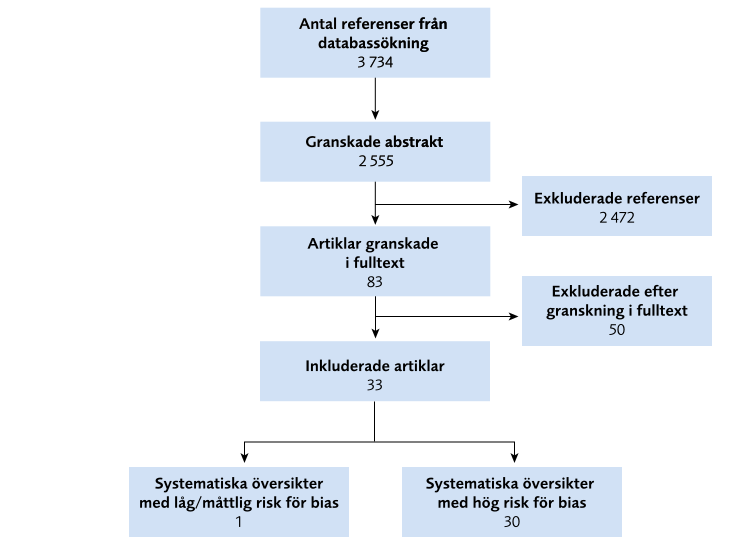
Vi inkluderade tre systematiska översikter med måttlig risk för bias [5] [6] [7]. Det innebär att vi anser att de är tillräckligt välgjorda för att presentera resultaten. Vi identifierade också 30 översikter som var relevanta för frågan men som vi bedömde ha hög risk för bias [8–37]. Eftersom hög risk för bias innebär en betydande risk för att resultaten är missvisande presenterar vi inga resultat eller slutsatser från de översikterna.
Sökning och urval av studier, samt bedömning av risk för bias beskrivs i metodavsnittet. Resultaten har inte analyserats utifrån svenska förhållanden.
Systematiska översikter
De tre inkluderade översikterna överlappar varandra både när det gäller frågeställning och inkluderade studier. Därför presenterar vi inte resultaten från översikten av Seitz och medförfattare [7]. Översikten är betydligt äldre än de två andra och redovisar liknande resultat.
Hsu och medförfattare publicerade år 2021 en systematisk översikt om effekten av vad de kallar serotonerga antidepressiva läkemedel vid neuropsykiatriska symtom och agitation hos patienter med demenssjukdom, med eller utan samtidig depression [5]. I översiktsförfattarnas definition av serotonerga antidepressiva läkemedel ingick antidepressiva läkemedel som verkar på serotoninsystemet, till exempel SSRI, SNRI och TCA. Totalt ingick 14 studier i översikten. Samtliga RCT-studier bedömdes vara relevanta för upplysningstjänstens svar. I tio av studierna hade deltagarna inte diagnostiserats med egentlig depression. I samtliga studier jämfördes de antidepressiva läkemedlen med placebo. Resultaten visade att serotonerga antidepressiva läkemedel hade en liten men statistiskt signifikant effekt på övergripande neuropsykiatriska symtom, agitation och depressiva symtom (Tabell 1). Liknande resultat sågs när analyserna begränsades till studier som enbart undersökt SSRI-preparat. Översiktsförfattarna bedömer att effekten på övergripande neuropsykiatriska symtom bör tolkas med försiktighet. Anledningen är att effekterna varierade betydligt mellan primärstudierna.
Kongpakwattana och medförfattare publicerade år 2018 en systematisk översikt med nätverksmetaanalys av läkemedelsbehandling för agitation hos personer med diagnostiserad demenssjukdom [6]. Nätverksmetaanalyser är en typ av metaanalys som gör det möjligt att jämföra flera insatser samtidigt. Metoden kan även jämföra insatser som inte har undersökts direkt mot varandra i enskilda studier [38]. Översikten omfattade flera olika läkemedel som jämfördes både med varandra och med placebo. Här redovisar vi endast resultaten för behandling med SSRI-preparat jämfört med placebo. Agitation mättes som andelen deltagare som efter åtta veckor hade minskat sina symtom med minst 50 procent jämfört med studiestarten, enligt den skattningsskala för agitation som användes i respektive studie. Författarna undersökte även behandlingsacceptans, mätt som andelen deltagare som avslutade behandlingen i förtid.
Fyra SSRI-preparat ingick i analyserna: citalopram, fluoxetin, fluvoxamin och sertralin. För varje SSRI-preparat baserades analyserna endast på en eller två studier. Inget av läkemedlen visade någon signifikant effekt när de undersöktes var för sig. I en känslighetsanalys, där läkemedlen grupperades utifrån farmakologiska läkemedelsklasser, rapporterades däremot en statistiskt signifikant effekt på agitation för SSRI-läkemedel som grupp.
| CI = confidence interval; OR = odds ratio; RCT = randomized controlled trial; SMD = standardized mean difference; SSRI = selective serotonin reuptake inhibitors |
||
| Included studies | Population, Intervention, Control | Outcome and Results |
|---|---|---|
| Hsu et al, 2021 [5] Efficacy of serotonergic antidepressant treatment for the neuropsychiatric symptoms and agitation in dementia: A systematic review and meta-analysis |
||
| 14 RCT Setting: Asia: 2 studies Europe: 5 studies North America: 7 studies |
Population: Patients diagnosed with dementia according to the Diagnostic and Statistical Manual of Mental Disorders (DSM) and the National Institute of Neurological and Communicative Disorders and Stroke and the Alzheimer’s disease and Related Disorders Association, including Alzheimer’s disease (NINCDS-ADRDA), frontotemporal dementia, and vascular dementia. Intervention: Serotonergic antidepressants as monotherapy or in combination with other treatments (e.g., anti-dementia medications) Control: Placebo |
Overall neuropsychiatric symptom (NPS) Serotonergic antidepressants (12 studies, n=1276): Serotonergic antidepressants were associated with a statistically significant reduction in overall NPS compared with placebo SMD: −0.49 (95% CI, −0.74 to −0.24) SSRIs (9 studies, n=1109): The subgroup SSRIs were associated with a statistically significant reduction in overall NPS compared with placebo SMD: –0.49 (95% CI, −0.78 to −0.20) Agitation Serotonergic antidepressants (9 studies, n=749): Serotonergic antidepressants were associated with a statistically significant reduction in agitation compared with placebo SMD: −0.49 (95% CI, −0.43 to −0.14) SSRIs (6 studies, n=605): The subgroup SSRIs were associated with a statistically significant reduction in agitation compared with placebo SMD: –0.49 (95% CI, −0.78 to −0.20) Depressive symptoms Serotonergic antidepressants (8 studies, n=938): Serotonergic antidepressants were associated with a statistically significant reduction in depressive symptoms compared with placebo SMD: –0.32 (95% CI, −0.49 to −0.15) SSRIs (6 studies): The subgroup SSRIs were associated with a statistically significant reduction in depressive symptoms compared with placebo SMD: –0.29 (95% CI, −0.48 to −0.09) Note: This is a short summary. Please see the review [5], for a complete list of results and analyses. |
| Authors' conclusion: ”The current meta-analysis of 14 RCTs involving a total of 1347 participants with dementia found that serotonergic antidepressants may effectively alleviate overall NPS, agitation, depressive symptoms, care burden, and improve cognition. However, the effect sizes range from very small to small and interpretation of results should be cautious. Even though, the present study provides additional evidence for the possible role of serotonergic antidepressants in managing overall NPS, agitation, and depressive symptoms in patients with dementia” |
||
| Kongpakwattana et al, 2018 [6] Pharmacological treatments for alleviating agitation in dementia: a systematic review and network meta-analysis |
||
| 36 RCTs included in network meta-analysis Setting: Asia: 6 studies Europe: 12 studies North America: 17 studies Australia/Oceania: 1 |
Population: Patients diagnosed with dementia based on standardized criteria who developed agitation Intervention: Pharmacological treatment |
Agitation 8-week response rates Citalopram (n=147) vs placebo: No statistically significant difference OR: 2.13 (95% CI, 0.92 to 4.93) Fluoxetine (n=6) vs placebo: No statistically significant difference OR: 0.93 (95% CI, 0.03 to 31.84) Fluvoxamine (n=28) vs placebo: No statistically significant difference OR: 2.65 (95% CI, 0.98 to 7.13) Sertraline (n=137) vs placebo No statistically significant difference: OR: 1.31 (95% CI, 0.73 to 2.36) SSRIs (n=318) vs placebo: Sensitivity analysis: SSRIs were associated with a statistically significant reduction in agitation OR: 1.61 (95% CI, 1.02 to 2.53) Treatment acceptability Citalopram (n=147) vs placebo: No statistically significant difference OR: 0.86 (95% CI, 0.42 to 1.77) Fluoxetine (n=6) vs placebo: No statistically significant difference OR: 0.19 (95% CI, 0.01 to 4.37) Fluvoxamine (n=28) vs placebo: No statistically significant difference OR: 2.34 (95% CI, 0.40 to 13.71) Sertraline (n=137) vs placebo: No statistically significant difference OR: 0.90 (95% CI, 0.42 to 1.96) Note: This is a short summary. Please see the review [6], for a complete list of results and analyses. |
| Authors' conclusion: ”SSRIs only showed significantly superior efficacy to placebo when considered as a class in the sensitivity analysis, suggesting that SSRIs have the potential to be more efficacious than placebo but current available evidence is insufficient to recommend one SSRI over another.” |
||
Metod
Sökning
Upplysningstjänsten gör en systematisk sökning i minst två vetenskapliga databaser. Fullständig sökdokumentation finns i Bilaga 1.
Urval
Bedömning av vilka artiklar som är relevanta sker i två steg och utgår från frågeställningen.
- Två utredare läser titel och sammanfattning av alla identifierade artiklar från sökningen, och gör en oberoende bedömning av artiklarnas relevans.
- Artiklarna som valts ut i steg 1 läses i fulltext av två utredare, som gör en oberoende bedömning av artiklarnas relevans.
Skillnader i bedömningarna löses genom diskussion.
Flödesschema för urval av artiklar finns i Bilaga 2. Om artiklar har granskats i fulltext, finns de artiklar som inte bedömts vara relevanta listade i Bilaga 3.
Bedömning av risk för bias
Risk för bias i relevanta systematiska översikter bedöms av två utredare, oberoende av varandra. Skillnader i bedömningarna löses genom diskussion.
Vid bedömning används granskningsmallen SnabbSTAR2. SnabbSTAR2 har fem steg, där översikter som uppfyller de krav som ställs i steg 1–4 bedöms ha måttlig risk för bias, och om 1–5 är uppfyllda bedöms risken för bias vara låg.
En översikt som har brister i stegen 1–4 bedöms ha hög risk för bias och redovisas inte eftersom resultaten kan vara missvisande.
I de fall vi har identifierat relevanta artiklar och gjort en bedömning av risk för bias, redovisas detta i Bilaga 4. Granskningsmallen SnabbSTAR2 med manual finns tillgänglig på vår hemsida.
Vid bedömning av nätverksmetaanalyser kompletteras SnabbSTAR2 med RoB NMA [39].
Vetenskapliga kunskapsluckor
Om sammanställd forskning av god kvalitet saknas registreras det som en vetenskaplig kunskapslucka i SBU:s databas över vetenskapliga kunskapsluckor. Kunskapsluckan kan bestå i att forskning helt saknas, att primärstudier finns men att det inte finns någon systematisk översikt, eller att de existerande systematiska översikterna inte bedöms leva upp till kraven för låg eller måttlig risk för bias.
Databasen över vetenskapliga kunskapsluckor kan nås via: https://www.sbu.se/sv/kunskapsluckor-sok/
Projektgrupp
Detta svar är sammanställt av Anna-My Strandell (utredare), Jessica Dagerhamn (utredare), Jens Fust (utredare), Sara Fundell (projektadministratör), Emma Wojda (enhetschef), Lotta Ryk (intern sakkunnig) samt Sigurd Vitols (intern sakkunnig) vid SBU.
Referenser
- Nationella riktlinjer för vård och omsorg vid demenssjukdom. Stockholm: Socialstyrelsen; 2017. Nationella riktlinjer. [accessed June 22 2026]. Available from: https://www.socialstyrelsen.se/publikationer/nationella-riktlinjer-for-vard-och-omsorg-vid-demenssjukdom-2017-12-2/
- Läkemedel som bör undvikas till äldre. Stockholm: Socialstyrelsen; 2025. [accessed June 22 2026]. Available from: https://www.socialstyrelsen.se/kunskapsstod-och-regler/omraden/aldre/stod-i-arbetet--vard-och-omsorg-for-aldre-personer--utifran-amnesomraden/aldre-och-lakemedel/
- Smärta vid psykiska symtom vid demens. Stockholm: Palliativt kunskapscentrum, Region Stockholm. [accessed June 22 2026]. Available from: https://www.pkc.regionstockholm.se/utveckling-forskning/vetenskapliga-referat/smarta-och-psykiska-symtom-vid-demens/
- Ferreira GE, Abdel-Shaheed C, Underwood M, Finnerup NB, Day RO, McLachlan A, et al. Efficacy, safety, and tolerability of antidepressants for pain in adults: overview of systematic reviews. BMJ. 2023;380:e072415. Available from: https://doi.org/10.1136/bmj-2022-072415
- Hsu TW, Stubbs B, Liang CS, Chen TY, Yeh TC, Pan CC, et al. Efficacy of serotonergic antidepressant treatment for the neuropsychiatric symptoms and agitation in dementia: A systematic review and meta-analysis. Ageing Res Rev. 2021;69:101362. Available from: https://doi.org/10.1016/j.arr.2021.101362
- Kongpakwattana K, Sawangjit R, Tawankanjanachot I, Bell JS, Hilmer SN, Chaiyakunapruk N. Pharmacological treatments for alleviating agitation in dementia: a systematic review and network meta-analysis. Br J Clin Pharmacol. 2018;84(7):1445–56. Available from: https://doi.org/10.1111/bcp.13604
- Seitz DP, Adunuri N, Gill SS, Gruneir A, Herrmann N, Rochon P. Antidepressants for agitation and psychosis in dementia. Cochrane Database Syst Rev. 2011;2011(2):CD008191. Available from: https://doi.org/10.1002/14651858.CD008191.pub2
- Berman K, Brodaty H, Withall A, Seeher K. Pharmacologic treatment of apathy in dementia. Am J Geriatr Psychiatry. 2012;20(2):104–22. Available from: https://doi.org/10.1097/JGP.0b013e31822001a6
- Buoli M, Serati M, Caldiroli A, Galimberti D, Scarpini E, Altamura AC. Pharmacological management of psychiatric symptoms in frontotemporal dementia: A systematic review. J Geriatr Psychiatry Neurol. 2017;30(3):162–9. Available from: https://doi.org/10.1177/0891988717700506
- Campos VLM, Serafim AP. Pharmacological Interventions for Excoriation Behaviors in Alzheimer's Disease: An Empty Systematic Review of Clinical Trials. Clin Neuropsychiatry. 2025;22(6):498–506. Available from: https://doi.org/10.36131/cnfioritieditore20250607
- Chen K, Li H, Yang L, Jiang Y, Wang Q, Zhang J, et al. Comparative efficacy and safety of antidepressant therapy for the agitation of dementia: A systematic review and network meta-analysis. Front Aging Neurosci. 2023;15:1103039. Available from: https://doi.org/10.3389/fnagi.2023.1103039
- da Silva AMP, Falcao L, Virgilio Ribeiro F, Ogasawara Donato K, Machado Magalhaes PL, Nascimento M, et al. Efficacy and Safety of Escitalopram and Citalopram for Agitation in Alzheimer's Disease: A Systematic Review and Meta-Analysis of Randomized Controlled Trials. J Geriatr Psychiatry Neurol. 2025;39(3):249–60. Available from: https://doi.org/10.1177/08919887251369893
- Dong M, Liu C, Luo H, Su D, Li G, Xu F, et al. Efficacy and tolerability of antidepressants monotherapy for behavioral and psychological symptoms of dementia: A meta-analysis of randomized controlled trials. J Psychiatr Res. 2025;181:417–24. Available from: https://doi.org/10.1016/j.jpsychires.2024.12.005
- Drijgers RL, Aalten P, Winogrodzka A, Verhey FR, Leentjens AF. Pharmacological treatment of apathy in neurodegenerative diseases: a systematic review. Dement Geriatr Cogn Disord. 2009;28(1):13–22. Available from: https://doi.org/10.1159/000228840
- Dudas R, Malouf R, McCleery J, Dening T. Antidepressants for treating depression in dementia. Cochrane Database Syst Rev. 2018;8(8):CD003944. Available from: https://doi.org/10.1002/14651858.CD003944.pub2
- Gerlach LB, Kales HC. Pharmacological Management of Neuropsychiatric Symptoms of Dementia. Curr Treat Options Psychiatry. 2020;7(4):489–507. Available from: https://doi.org/10.1007/s40501-020-00233-9
- Harrison F, Aerts L, Brodaty H. Apathy in Dementia: Systematic Review of Recent Evidence on Pharmacological Treatments. Curr Psychiatry Rep. 2016;18(11):103. Available from: https://doi.org/10.1007/s11920-016-0737-7
- He Y, Li H, Huang J, Huang S, Bai Y, Li Y, et al. Efficacy of antidepressant drugs in the treatment of depression in Alzheimer disease patients: A systematic review and network meta-analysis. J Psychopharmacol. 2021;35(8):901–9. Available from: https://doi.org/10.1177/02698811211030181
- Herrmann N, Lanctot KL. Pharmacologic management of neuropsychiatric symptoms of Alzheimer disease. Can J Psychiatry. 2007;52(10):630–46. Available from: https://doi.org/10.1177/070674370705201004
- Huang YY, Teng T, Shen XN, Chen SD, Wang RZ, Zhang RQ, et al. Pharmacological treatments for psychotic symptoms in dementia: A systematic review with pairwise and network meta-analysis. Ageing Res Rev. 2022;75:101568. Available from: https://doi.org/10.1016/j.arr.2022.101568
- Husebo BS, Ballard C, Aarsland D. Pain treatment of agitation in patients with dementia: a systematic review. Int J Geriatr Psychiatry. 2011;26(10):1012–8. Available from: https://doi.org/10.1002/gps.2649
- Lenouvel E, Tobias S, Muhlbauer V, Dallmeier D, Denkinger M, Kloppel S, et al. Antidepressants for treating depression among older adults with dementia: A systematic review and meta-analysis. Psychiatry Res. 2024;340:116114. Available from: https://doi.org/10.1016/j.psychres.2024.116114
- Martinon-Torres G, Fioravanti M, Grimley EJ. Trazodone for agitation in dementia. Cochrane Database Syst Rev. 2004(4):CD004990. Available from: https://doi.org/10.1002/14651858.CD004990
- Mischel N, Rakesh G, Gupta S, Muzyk A, Masand P. Pharmacological agents to treat severe neuropsychiatric symptoms in major neurocognitive disorders. Ann Clin Psychiatry. 2020;32(2):128–41.
- Nardell M, Tampi RR. Pharmacological treatments for frontotemporal dementias: a systematic review of randomized controlled trials. Am J Alzheimers Dis Other Demen. 2014;29(2):123–32. Available from: https://doi.org/10.1177/1533317513507375
- Nelson JC, Devanand DP. A systematic review and meta-analysis of placebo-controlled antidepressant studies in people with depression and dementia. J Am Geriatr Soc. 2011;59(4):577–85. Available from: https://doi.org/10.1111/j.1532-5415.2011.03355.x
- Nisar M, Abubaker ZJ, Nizam MA, Shaikh HT, Abbasi I, Rehman MOU, et al. Behavioral and Cognitive Response to Selective Serotonin Reuptake Inhibitors in Frontotemporal Lobar Degeneration: A Systematic Review and Meta-analysis. Clin Neuropharmacol. 2021;44(5):175–83. Available from: https://doi.org/10.1097/WNF.0000000000000469
- Pai RS, Shashikala IM, Sudhakar PH. Efficacy of Antidepressants in Management of Depressive Symptoms in Dementia: A Systematic Review and Meta-analysis of Randomized Controlled Trials. J Psychiatr Spectr. 2025;4(1):66–76. Available from: https://doi.org/10.4103/jopsys.jopsys_32_24
- Pieper MJC, van Dalen-Kok AH, Francke AL, van der Steen JT, Scherder EJA, Husebø BS, et al. Interventions targeting pain or behaviour in dementia: Results of a systematic review. Eur Geriatr Med. 2013;4:S87–S8. Available from: https://doi.org/10.1016/j.eurger.2013.07.286
- Qasim HS, Simpson MD. A Narrative Review of Studies Comparing Efficacy and Safety of Citalopram with Atypical Antipsychotics for Agitation in Behavioral and Psychological Symptoms of Dementia (BPSD). Pharmacy (Basel). 2022;10(3). Available from: https://doi.org/10.3390/pharmacy10030061
- Seibert M, Muhlbauer V, Holbrook J, Voigt-Radloff S, Brefka S, Dallmeier D, et al. Efficacy and safety of pharmacotherapy for Alzheimer's disease and for behavioural and psychological symptoms of dementia in older patients with moderate and severe functional impairments: a systematic review of controlled trials. Alzheimers Res Ther. 2021;13(1):131. Available from: https://doi.org/10.1186/s13195-021-00867-8
- Sepehry AA, Lee PE, Hsiung GY, Beattie BL, Jacova C. Effect of selective serotonin reuptake inhibitors in Alzheimer's disease with comorbid depression: a meta-analysis of depression and cognitive outcomes. DRUGS AGING. 2012;29(10):793–806. Available from: https://doi.org/10.1007/s40266-012-0012-5
- Sink KM, Holden KF, Yaffe K. Pharmacological treatment of neuropsychiatric symptoms of dementia: a review of the evidence. 2005;293(5):596–608. Available from: https://doi.org/10.1001/jama.293.5.596
- Tampi RR, Hassell C, Joshi P, Tampi DJ. Analgesics in the management of behavioral and psychological symptoms of dementia: a perspective review. Drugs Context. 2017;6( 212508):212508. Available from: https://doi.org/10.7573/dic.212508
- Thompson S, Herrmann N, Rapoport MJ, Lanctot KL. Efficacy and safety of antidepressants for treatment of depression in Alzheimer's disease: a metaanalysis. Can J Psychiatry. 2007;52(4):248–55. Available from: https://doi.org/10.1177/070674370705200407
- Wang J, Yu JT, Wang HF, Meng XF, Wang C, Tan CC, et al. Pharmacological treatment of neuropsychiatric symptoms in Alzheimer's disease: a systematic review and meta-analysis. J Neurol Neurosurg Psychiatry. 2015;86(1):101–9. Available from: https://doi.org/10.1136/jnnp-2014-308112
- Zhang J, Zheng X, Zhao Z. A systematic review and meta-analysis on the efficacy outcomes of selective serotonin reuptake inhibitors in depression in Alzheimer's disease. BMC Neurol. 2023;23(1):210. Available from: https://doi.org/10.1186/s12883-023-03191-w
- Utvärdering av insatser i hälso- och sjukvården och socialtjänsten: En metodbok. Stockholm: Statens beredning för medicinsk och social utvärdering (SBU); 2023. [accessed June 25 2026]. Available from: https://www.sbu.se/metodbok
- Lunny C, Higgins JPT, White IR, Dias S, Hutton B, Wright JM, et al. Risk of Bias in Network Meta-Analysis (RoB NMA) tool. BMJ. 2025;388:e079839. Available from: https://doi.org/10.1136/bmj-2024-079839
Bilaga 1 Dokumentation av sökstrategier
Upplysningstjänsten har gjort sökningar i databaserna Medline (Ovid), Scopus och Embase. Sökningen har begränsats till systematiska översikter.
Nedan redovisas sökningen som gjorts i de vetenskapliga databaserna.
Medline via OvidSP 25 March 26
| / = Term from the MeSH controlled vocabulary; .sh = Term from the MeSH controlled vocabulary; exp = Term from MeSH including terms found below this term in the MeSH hierarchy; .ti,ab = Title or abstract; .tw = Title or abstract; .kf = Keywords; .kw = Keywords, exact; .bt = Book title. NLM Bookshelf; .pt = Publication type; .ja = Journal abbreviation; .af = All fields; adjn = Adjacent. Proximity operator retrieving adjacent words, adj3 retrieves records with search terms within two terms from each other; * or $ = Truncation; “ “ = Citation Marks; searches for an exact phrase | ||
| Search terms | Items found | |
|---|---|---|
| Population: Persons with dementia | ||
| 1. | Exp Dementia/ | 237 687 |
| 2. | (Dement* OR Mild Cognitive Impairment OR MCI OR Alzheimer* OR Lewy body OR frontotemporal diseas* OR Major Neurocognitive Disorder).ti,ab,kf. | 360 865 |
| 3. | ((vascular OR frontotemporal OR parkinson* OR alcohol OR mixed) adj4 (dement*)).ti,ab,kf. | 29 468 |
| 4. | 1 OR 2 OR 3 | 403 181 |
| Intervention: Analgesics or antidepressants | ||
| 5. | Exp Analgesics/ | 628 272 |
| 6. | Anticonvulsants/ | 59 630 |
| 7. | (Analgesic* OR anticonvulsant* OR analgetic* OR paracetamol OR acetaminophen OR pregabalin OR gabapentin OR lyrica OR neurontin).ti,ab,kf. | 177 090 |
| 8. | (pain adj4 (treatment OR management OR relief)).ti,ab,kf. | 149 901 |
| 9. | 5 OR 6 OR 7 OR 8 | 853 763 |
| 10. | Exp Antidepressive Agents/ | 169 521 |
| 11. | Selective Serotonin Reuptake Inhibitors/ | 22 281 |
| 12. | “Serotonin and Noradrenaline Reuptake Inhibitors”/ | 679 |
| 13. | (ssri OR snri OR antidepr* OR selective serotonin reuptake inhibitor* OR “serotonin and noradrenalin reuptake inhibitor*” OR citalopram OR escitalopram OR sertraline OR duloxetine OR venlafaxine).ti,ab,kf. | 106 944 |
| 14. | 10 OR 11 OR 12 OR 13 | 217 796 |
| 15. | 9 OR 14 | 1 041 946 |
| Study types: systematic reviews and meta-analysis | ||
| 16. | (Systematic Review/ or Meta-Analysis/ or Cochrane Database Syst Rev.ja. or (((systematic or realist or integrative or mixed method* or umbrella) adj4 (review)) or "meta analys*" or metaanalys*).ti,bt,ab.) not (editorial/ or letter/ or case reports/) | 606 252 |
| Combined sets: | ||
| 17. | 4 AND 15 AND 16 | 395 |
| Final result | ||
| 18. | 395 | |
Scopus via scopus.com 25 March 26
| Search terms | Items found | |||
|---|---|---|---|---|
| TITLE-ABS-KEY = Title, abstract or keywords (including indexed keywords and author keywords); ALL = All fields; W/n = Within. Proximity operator retrieving terms within n words from each other; PRE/n = Precedes by. Proximity operator, the first term in the search must precede the second by n words; LIMIT-TO (X) = Includes only results of specified type, e.g., publication type or time range; DOCTYPE = Publication type; “re” = review; “le” = letter; “ed” = editorial; “ch” = book chapter; “cp” = conference proceedings; * = Truncation; “ “ = Citation Marks; searches for an exact phrase | ||||
| Population: Persons with dementia | ||||
| 1. | TITLE-ABS-KEY (Dement* OR "Mild Cognitive Impairment" OR MCI OR Alzheimer* OR “lewy body” OR “frontotemporal disease” OR “Major Neurocognitive Disorder”) | 550 575 | ||
| 2. | TITLE-ABS-KEY ((vascular OR frontotemporal OR parkinson* OR alcohol OR mixed) W/3 dement*) | 42 921 | ||
| 3. | 1 OR 2 | 550 575 | ||
| Intervention: Analgesics or antidepressants | ||||
| 4. | TITLE-ABS-KEY (analgesic* OR anticonvulsant* OR analgetic* OR paracetamol OR acetaminophen OR pregabalin OR gabapentin OR lyrica OR neurontin) | 497 671 | ||
| 5. | TITLE-ABS-KEY ((pain) W/3 (treatment OR management OR relief)) | 204 209 | ||
| 6. | 4 OR 5 | 633 355 | ||
| 7. | TITLE-ABS-KEY (ssri OR snri OR antidepr* OR “selective serotonin reuptake inhibitor*” OR “serotonin and noradrenalin reuptake inhibitor*” OR citalopram OR escitalopram OR sertraline OR duloxetine OR venlafaxine) | 251 033 | ||
| 8. | 6 OR 7 | 844 853 | ||
| Study types: systematic reviews and meta-analysis | ||||
| 9. | TITLE-ABS-KEY (((systematic OR realist OR integrative OR “mixed method*” or umbrella) W/3 review) OR "meta analy*" OR metaanaly*) AND (EXCLUDE (DOCTYPE, “le”) OR EXCLUDE (DOCTYPE, “ed”) OR EXCLUDE (DOCTYPE, “ch”) OR EXCLUDE (DOCTYPE, “cp”)) | 912 758 | ||
| Combined sets: | ||||
| 10. | 3 AND 8 AND 9 | 1192 | ||
| Final result | ||||
| 11. | 1192 | |||
Embase via Elsevier 25 March 26
| /de = Term from the EMTREE controlled vocabulary; /exp = Term from the EMTREE controlled vocabulary, including all narrower terms in the hierarchy; ti = Title; ab = Abstract; kw = Author keywords; it = Publication type; NEAR/n = Near. Proximity operator retrieving terms within n words from each other; * = Truncation; ‘ ‘ = Citation Marks; searches for an exact phrase | |||
| Search terms | Items found | ||
|---|---|---|---|
| Population: Persons with dementia | |||
| 1. | 'Dementia'/exp OR 'mild cognitive impairment'/exp AND [embase]/lim | 506 098 | |
| 2. | ('Dement*':ti,ab,kw OR 'Mild Cognitive Impairment':ti,ab,kw OR 'MCI':ti,ab,kw OR 'Alzheimer*':ti,ab,kw OR 'Lewy body':ti,ab,kw OR 'frontotemporal diseas*':ti,ab,kw OR 'Major Neurocognitive Disorde':ti,ab,kw) AND [embase]/lim | 450 327 | |
| 3. | (('vascular' OR 'frontotemporal' OR 'parkinson*' OR 'alcohol' OR 'mixed') NEAR/3 ('dement*')):ti,ab,kw AND [embase]/lim | 37 901 | |
| 4. | 1 OR 2 OR 3 | 591 847 | |
| Intervention: Analgesics or antidepressants | |||
| 5. | 'analgesic agent'/exp OR 'anticonvulsive agent'/exp OR 'paracetamol'/exp OR 'pregabalin'/exp OR 'gabapentin'/exp OR 'analgesia'/exp AND [embase]/lim | 1 751 388 | |
| 6. | (('pain') NEAR/4 ('treatment' OR 'management' OR 'relief')):ti,ab,kw AND [embase]/lim | 186 584 | |
| 7. | 5 OR 6 | 1 814 755 | |
| 8. | 'antidepressant agent'/exp OR 'serotonin uptake inhibitor'/exp OR 'serotonin noradrenalin reuptake inhibitor'/exp AND [embase]/lim | 646 780 | |
| 9. | ('ssri' OR 'snri' OR 'antidepr*' OR 'selective serotonin reuptake inhibitor*' OR 'serotonin and noradrenalin reuptake inhibitors' OR 'citalopram' OR 'escitalopram' OR 'sertraline' OR 'duloxetine' OR 'venlafaxine'):ti,ab,kw AND [embase]/lim | 147 624 | |
| 10. | 8 OR 9 | 666 316 | |
| 11. | 7 OR 10 | 2 156 638 | |
| Study types: systematic reviews and meta-analysis | |||
| 12. | ('systematic review'/de OR 'meta analysis'/de OR [cochrane review]/lim OR (((systematic NEAR/4 review) OR 'meta analys*' OR metaanalys*):ti,ab)) NOT ('case report'/de OR 'editorial'/it OR 'letter'/it OR 'note'/it) | 878 047 | |
| Combined sets: | |||
| 13. | 4 AND 11 AND 12 | 2147 | |
| Final result | |||
| 14. | 2147 | ||
Bilaga 2 Flödesschema för urval av artiklar
Bilaga 3 Exkluderade artiklar
| Excluded articles | Reason for exclusion |
|---|---|
| Systematic reviews | |
| Ballard C, Corbett A. Agitation and aggression in people with Alzheimer's disease. Curr Opin Psychiatry. 2013;26(3):252–9. Available from: https://doi.org/10.1097/YCO.0b013e32835f414b | Wrong language |
| Bedward A, Kaur J, Seedat S, Donohue H, Kow CS, Rasheed MK, et al. Pharmacological interventions to improve sleep in people with Alzheimer's disease: a meta-analysis of randomized controlled trials. Expert Rev Neurother. 2024;24(5):527–39. Available from: https://doi.org/10.1080/14737175.2024.2341004 | Wrong intervention |
| Benjamin S, Ho JM, Tung J, Dholakia S, An H, Antoniou T, et al. Anticonvulsants in the Treatment of Behavioral and Psychological Symptoms in Dementia: A Systematic Review. Am J Geriatr Psychiatry. 2024;32(10):1259–70. Available from: https://doi.org/10.1016/j.jagp.2024.05.004 | Wrong intervention |
| Bhandari N. Serotonergic Drugs for Management of Behavioural Symptoms of Frontotemporal Dementia: A Systematic Review. J Neurol Neurosurg Psychiatry. 2015;86(9):e3.15–e3. Available from: https://doi.org/10.1136/jnnp-2015-311750.22 | Not a systematic review |
| Bouchard LO, Bodryzlova Y, Potvin O, Duchesne S. Effect of pharmacotherapy on cognition in frontotemporal lobar degeneration: A systematic review and meta-analysis of randomized controlled trials. Alzheimers Dement. 2015;11(7):P464. | Not a systematic review |
| Burley CV, Burns K, Brodaty H. Underlying biopsychosocial mechanisms of disinhibited behaviours in dementia and a systematic review of management approaches. Alzheimers Dement. 2020;16. Available from: https://doi.org/10.1002/alz.12278 | Not a systematic review |
| Burley CV, Burns K, Brodaty H. Pharmacological and nonpharmacological approaches to reduce disinhibited behaviors in dementia: a systematic review. Int Psychogeriatr. 2022;34(4):335–51. Available from: https://doi.org/10.1017/S1041610222000151 | Wrong intervention |
| Buyukgok D, Ince Guliyev E, Bilgic B. Apathy in dementia: pharmacological and nonpharmacological treatment strategies. Curr Opin Psychiatry. 2026;39(2):160–7. Available from: https://doi.org/10.1097/YCO.0000000000001054 | Not a systematic review |
| Chu CS, Yang FC, Tseng PT, Stubbs B, Dag A, Carvalho AF, et al. Treatment Efficacy and Acceptabilityof Pharmacotherapies for Dementia with Lewy Bodies: A Systematic Review and Network Meta-Analysis. Arch Gerontol Geriatr. 2021;96:104474. Available from: https://doi.org/10.1016/j.archger.2021.104474 | Relevant results not analysed separately |
| Crowley P, O'Donovan MR, Leahy P, Flanagan E, O'Caoimh R. Pharmacological and Non-Pharmacological Interventions to Improve Sleep in People with Cognitive Impairment: A Systematic Review and Meta-Analysis. Int J Environ Res Public Health. 2025;22(6). Available from: https://doi.org/10.3390/ijerph22060956 | Relevant results not analysed separately |
| David MCB, Del Giovane M, Liu KY, Gostick B, Rowe JB, Oboh I, et al. Cognitive and neuropsychiatric effects of noradrenergic treatment in Alzheimer's disease: systematic review and meta-analysis. J Neurol Neurosurg Psychiatry. 2022;93(10):1080–90. Available from: https://doi.org/10.1136/jnnp-2022-329136 | Relevant results not analysed separately |
| Dyer SM, Harrison SL, Laver K, Whitehead C, Crotty M. An overview of systematic reviews of pharmacological and non-pharmacological interventions for the treatment of behavioral and psychological symptoms of dementia. Int Psychogeriatr. 2018;30(3):295–309. Available from: https://doi.org/10.1017/S1041610217002344 | Not a systematic review |
| Enayat P, Norouzizadeh F, Bahrami M, Saberi S, Solhirad M, Karimi-Zandi L. SSRIs and Alzheimer’s Disease: A Complex Relationship. Cur Behav Neurosci Rep. 2025;12(1). Available from: https://doi.org/10.1007/s40473-025-00309-x | No synthesis |
| Erdal A, Ballard C, Vahia IV, Husebo BS. Analgesic treatments in people with dementia - how safe are they? A systematic review. Expert Opin Drug Saf. 2019;18(6):511–22. Available from: https://doi.org/10.1080/14740338.2019.1614166 | Wrong outcome. Lästips! |
| Franco KN, Messinger-Rapport B. Pharmacological treatment of neuropsychiatric symptoms of dementia: a review of the evidence. J Am Med Dir Assoc. 2006;7(3):201–2. Available from: https://doi.org/10.1016/j.jamda.2005.12.024 | Not a systematic review |
| Gahr M. Benefits and risks of gabapentinoids in geriatric psychiatry. Nervenarzt. 2025. Available from: https://doi.org/10.1007/s00115-025-01850-6 | Wrong language |
| Huang MH, Zeng BS, Tseng PT, Hsu CW, Wu YC, Tu YK, et al. Treatment Efficacy of Pharmacotherapies for Frontotemporal Dementia: A Network Meta-Analysis of Randomized Controlled Trials. Am J Geriatr Psychiatry. 2023;31(12):1062–73. Available from: https://doi.org/10.1016/j.jagp.2023.06.013 | Relevant results not analysed separately |
| Huang YY, Teng T, Giovane CD, Wang RZ, Suckling J, Shen XN, et al. Pharmacological treatment of neuropsychiatric symptoms of dementia: a network meta-analysis. Age Ageing. 2023;52(6). Available from: https://doi.org/10.1093/ageing/afad091 | Relevant results not analysed separately |
| Jiang LL, Wu YL, Mo Y, Gou L, Chen ML, Wang Y, et al. The effects of paroxetine therapy on depressive symptom and motor function in the treatment of depression with Parkinson's disease: A meta-analysis. Medicine (Baltimore). 2023;102(34):e34687. Available from: https://doi.org/10.1097/MD.0000000000034687 | Wrong population |
| Jin B, Liu H. Comparative efficacy and safety of therapy for the behavioral and psychological symptoms of dementia: a systemic review and Bayesian network meta-analysis. J Neurol. 2019;266(10):2363–75. Available from: https://doi.org/10.1007/s00415-019-09200-8 | Relevant results not analysed separately |
| Jin B, Xv Y, Zhang B, Qiao L, Liu H. Comparative efficacy and acceptability of treatments for depressive symptoms in cognitive impairment: A systematic review and Bayesian network meta-analysis. Front Aging Neurosci. 2022;14:1037414. Available from: https://doi.org/10.3389/fnagi.2022.1037414 | Relevant results not analysed separately |
| Kok RM. [Reducing depressive symptoms in patients with dementia]. Ned Tijdschr Geneeskd. 2021;165. | Not a systematic review |
| Kozman MN, Wattis J, Curran S. Pharmacological management of behavioural and psychological disturbance in dementia. Hum Psychopharmacol. 2006;21(1):1–12. Available from: https://doi.org/10.1002/hup.745 | No synthesis |
| Leong C. Antidepressants for depression in patients with dementia: a review of the literature. Consult Pharm. 2014;29(4):254–63. Available from: https://doi.org/10.4140/TCP.n.2014.254 | Not a systematic review |
| Liu J, Wang LN. Efficacy and safety of valproic acid in dementia: A systematic review with meta-analysis. Arch Gerontol Geriatr. 2020;89:104091. Available from: https://doi.org/10.1016/j.archger.2020.104091 | Wrong intervention |
| McCleery J, Sharpley AL. Pharmacotherapies for sleep disturbances in dementia. Cochrane Database Syst Rev. 2020;11(11):CD009178. Available from: https://doi.org/10.1002/14651858.CD009178.pub4 | Wrong intervention |
| Modrego P. Pharmacologic treatment of depression in Alzheimer's disease. Meta-analysis from randomised placebo-controlled trials. Eur J Neurol. 2010;17:87. Available from: https://doi.org/10.1111/j.1468-1331.2010.03232.x | Not a systematic review |
| Mohamadi MH, Bavafa A, Salehi S, Abedi M, Shahabi F, Jafarlou S, et al. Cognitive Effect of Levetiracetam in Patients with Alzheimer's Disease or Mild Cognitive Impairment: A Systematic Review. Curr Ther Res Clin Exp. 2025;103:100798. Available from: https://doi.org/10.1016/j.curtheres.2025.100798 | Wrong intervention |
| Nimmons D, Aker N, Burnand A, Jordan KP, Cooper C, Davies N, et al. Clinical effectiveness of pharmacological and non-pharmacological treatments for the management of anxiety in community dwelling people living with dementia: A systematic review and meta-analysis. Neurosci Biobehav Rev. 2024;157:105507. Available from: https://doi.org/10.1016/j.neubiorev.2023.105507 | No synthesis |
| Ouazzani Housni Touhami Y, Layoussifi E, Benjelloun R. Practice recommendations to manage Alzheimer’s disease based on the targeted behavioral and psychological symptoms. Eur Psychiatry. 2024;67(S1):S638–S. Available from: https://doi.org/10.1192/j.eurpsy.2024.1322 | Not a systematic review |
| Rane A, Prabhune K, Chen N, Kaliki S, Yunusa I. Relative Efficacy of Pharmacological Treatments of Agitation and Aggression in Patients with Dementia: A Systematic Review and Network Meta-Analysis. Value in Health. 2023;26(6):S17. Available from: https://doi.org/10.1016/j.jval.2023.03.093 | Not a systematic review |
| Seitz DP, Gill SS, Herrmann N, Brisbin S, Rapoport MJ, Rines J, et al. Pharmacological treatments for neuropsychiatric symptoms of dementia in long-term care: a systematic review. Int Psychogeriatr. 2013;25(2):185–203. Available from: https://doi.org/10.1017/S1041610212001627 | Wrong intervention |
| Stinton C, McKeith I, Taylor JP, Lafortune L, Mioshi E, Mak E, et al. Pharmacological Management of Lewy Body Dementia: A Systematic Review and Meta-Analysis. Am J Psychiatry. 2015;172(8):731–42. Available from: https://doi.org/10.1176/appi.ajp.2015.14121582 | Relevant results not analysed separately |
| Stürzlinger H, Eisenmann A, Antony K, Laschkolnig A, Pertl D. Pharmacotherapies for the treatment of behavioral and psychological symptoms of dementia-a systematic review on recent evidence. Value in Health. 2016;19(7):A427. | Not a systematic review |
| Supasitthumrong T, Bolea-Alamanac BM, Asmer S, Woo VL, Abdool PS, Davies SJC. Gabapentin and pregabalin to treat aggressivity in dementia: a systematic review and illustrative case report. Br J Clin Pharmacol. 2019;85(4):690–703. Available from: https://doi.org/10.1111/bcp.13844 | No synthesis |
| Sys J. Efficacy and safety of non-benzodiazepine and non-Z-drug hypnotic medication for insomnia in older people: A systematic literature review. Eur Geriatr Med. 2019;10:S189. Available from: https://doi.org/10.1007/s41999-019-00221-0 | Wrong population |
| Tampi R, Hassell C, Joshi P, Tampi D. Analgesics in the Management of Behavioral and Psychological Symptoms of Dementia: A Systematic Review. Am J Geriatr Psychiatry. 2018;26(3):S143–S4. Available from: https://doi.org/10.1016/j.jagp.2018.01.174 | Not a systematic review |
| Tampi R, Tampi D, Young JJ, Balachandran S, Arshiya farheen FNUS, Alag P. Antipsychotics, Antidepressants, Anticonvulsants, Melatonin, and Benzodiazepines for Behavioral and Psychological Symptoms of Dementia: A Systematic Review of Meta-Analyses. Am J Geriatr Psychiatry. 2018;26(3):S93. Available from: https://doi.org/10.1016/j.jagp.2018.01.113 | Not a systematic review |
| Tampi RR. Treatments for Frontotemporal Dementia (FTD): A Network Meta-analysis. Am J Geriatr Psychiatry. 2023;31(12):1074–6. Available from: https://doi.org/10.1016/j.jagp.2023.07.005 | Not a systematic review |
| Tampi RR, Tampi DJ, Balachandran S. Antipsychotics, Antidepressants, Anticonvulsants, Melatonin, and Benzodiazepines for Behavioral and Psychological Symptoms of Dementia: a Systematic Review of Meta-analyses. Curr Treat Options Psychiatry. 2017;4(1):55–79. Available from: https://doi.org/10.1007/s40501-017-0104-2 | Not a systematic review |
| Trieu C, Gossink F, Stek ML, Scheltens P, Pijnenburg YAL, Dols A. Effectiveness of Pharmacological Interventions for Symptoms of Behavioral Variant Frontotemporal Dementia: A Systematic Review. Cogn Behav Neurol. 2020;33(1):1–15. Available from: https://doi.org/10.1097/WNN.0000000000000217 | Relevant results not analysed separately |
| Uribe ES, Rodríguez CAB, Juárez MEN, Juárez SM, Lucio RH, Guzmán KER, et al. “Pharmacological management of acute agitation in psychiatric patients: an umbrella review”. BMC Psychiatry. 2025;25(1). Available from: https://doi.org/10.1186/s12888-024-06426-3 | Wrong population |
| Wang H, Li S, Zhang J, Peng W, Li T, Zhang J. Efficacy of selective serotonin reuptake inhibitors-related antidepressants in Alzheimer's disease: a meta-analysis. Eur J Med Res. 2024;29(1):438. Available from: https://doi.org/10.1186/s40001-024-02006-z | Relevant results not analysed separately |
| Wang J, Yu JT, Wang HF, Meng XF, Wang C, Tan CC, et al. Pharmacological treatment of neuropsychiatric symptoms in Alzheimer's disease: a systematic review and meta-analysis. J Neurol Neurosurg Psychiatry. 2015;86(1):101–9. Available from: https://doi.org/10.1136/jnnp-2014-308112 | Wrong outcome |
| Wang OY, Calev N, Mintzer J, Fritts A, Molina-Henry DP, Grill JD, et al. Current evidence of randomized clinical trials on hospice-eligible patients with agitation and dementia: A narrative review. Palliat Support Care. 2025;23:e209. Available from: https://doi.org/10.1017/S1478951525101119 | No synthesis |
| Watt JA, Goodarzi Z, Veroniki A, Tricco A, Straus S. Comparative efficacy of pharmacological and non-pharmacological treatments for aggressive behaviors in dementia: A systematic review and network meta-analysis. J Am Geriatr Soc. 2018;66:S133. Available from: https://doi.org/10.1111/jgs.15376 | Not a systematic review |
| Watt JA, Goodarzi Z, Veroniki AA, Nincic V, Khan PA, Ghassemi M, et al. Comparative efficacy of interventions for reducing symptoms of depression in people with dementia: systematic review and network meta-analysis. BMJ. 2021;372:n532. Available from: https://doi.org/10.1136/bmj.n532 | Relevant results not analysed separately |
| Watt JA, Goodarzi Z, Veroniki AA, Nincic V, Khan PA, Ghassemi M, et al. Safety of pharmacologic interventions for neuropsychiatric symptoms in dementia: a systematic review and network meta-analysis. BMC Geriatr. 2020;20(1):212. Available from: https://doi.org/10.1186/s12877-020-01607-7 | Wrong intervention |
| Xie Y, Liu PP, Lian YJ, Liu HB, Kang JS. The effect of selective serotonin reuptake inhibitors on cognitive function in patients with Alzheimer's disease and vascular dementia: focusing on fluoxetine with long follow-up periods. Signal Transduct Target Ther. 2019;4(1):30. Available from: https://doi.org/10.1038/s41392-019-0064-7 | Not a systematic review |
| Yu JT. Pharmacological treatment of neuropsychiatric symptoms of dementia: A network meta-analysis. J Prev Alzheimer's Dis. 2021;8:S76. Available from: https://doi.org/10.14283/jpad.2021.58 | Not a systematic review |
Bilaga 4 Risk för bias hos relevanta systematiska översikter
 = Critical; = Critical;  = High; = High;  = Moderate; = Moderate;  = Low; = Low;  = Not assessed = Not assessed |
||||||
| Study | Step 1 | Step 2 | Step 3 | Step 4 | Step 5 | Overall |
|---|---|---|---|---|---|---|
| Berman 2012 | |
|
|
|
|
|
| Buoli 2017 | |
|
|
|
|
|
| Campos 2025 | |
|
|
|
|
|
| Chen 2023 | |
|
|
|
|
|
| da Silva 2025 | |
|
|
|
|
|
| Dong 2025 | |
|
|
|
|
|
| Drijgers 2009 | |
|
|
|
|
|
| Dudas 2018 | |
|
|
|
|
|
| Gerlach 2020 | |
|
|
|
|
|
| Harrison 2016 | |
|
|
|
|
|
| He 2021 | |
|
|
|
|
|
| Herrmann 2007 | |
|
|
|
|
|
| Hsu 2021 | |
|
|
|
|
|
| Huang 2022 | |
|
|
|
|
|
| Husebo 2011 | |
|
|
|
|
|
| Kongpakwattana 2018 | |
|
|
|
|
|
| Lenouvel 2024 | |
|
|
|
|
|
| Martinon-Torres 2004 | |
|
|
|
|
|
| Misar 2021 | |
|
|
|
|
|
| Mischel 2020 | |
|
|
|
|
|
| Nardell 2014 | |
|
|
|
|
|
| Nelson 2011 | |
|
|
|
|
|
| Pai 2025 | |
|
|
|
|
|
| Pieper 2013 | |
|
|
|
|
|
| Qasim 2022 | |
|
|
|
|
|
| Seibert | |
|
|
|
|
|
| Seibert 2021 | |
|
|
|
|
|
| Seitz 2011 | |
|
|
|
|
|
| Sepehry 2012 | |
|
|
|
|
|
| Sink 2005 | |
|
|
|
|
|
| Tampi 2017 | |
|
|
|
|
|
| Thompson 2007 | |
|
|
|
|
|
| Wang 2015 | |
|
|
|
|
|
| Zhang 2023 | |
|
|
|
|
|
Risk-of-bias plot generated using robvis: McGuinness, LA, Higgins, JPT. Risk-of-bias VISualization (robvis): An R package and Shiny web app for visualizing risk-of-bias assessments. Res Syn Meth. 2020; 1- 7. https://doi.org/10.1002/jrsm.1411
 Statens beredning för medicinsk och social utvärdering
 Dela sidan på Facebook
 Dela sidan på LinkedIn
 Dela sidan via E-post
